Manchester Engineering Drawings: Where the Records Survive Today
Drawings, patents, letterbooks and catalogues from Manchester's works are scattered across a handful of reading rooms. This guide explains which institution holds what, and how to ask for it.
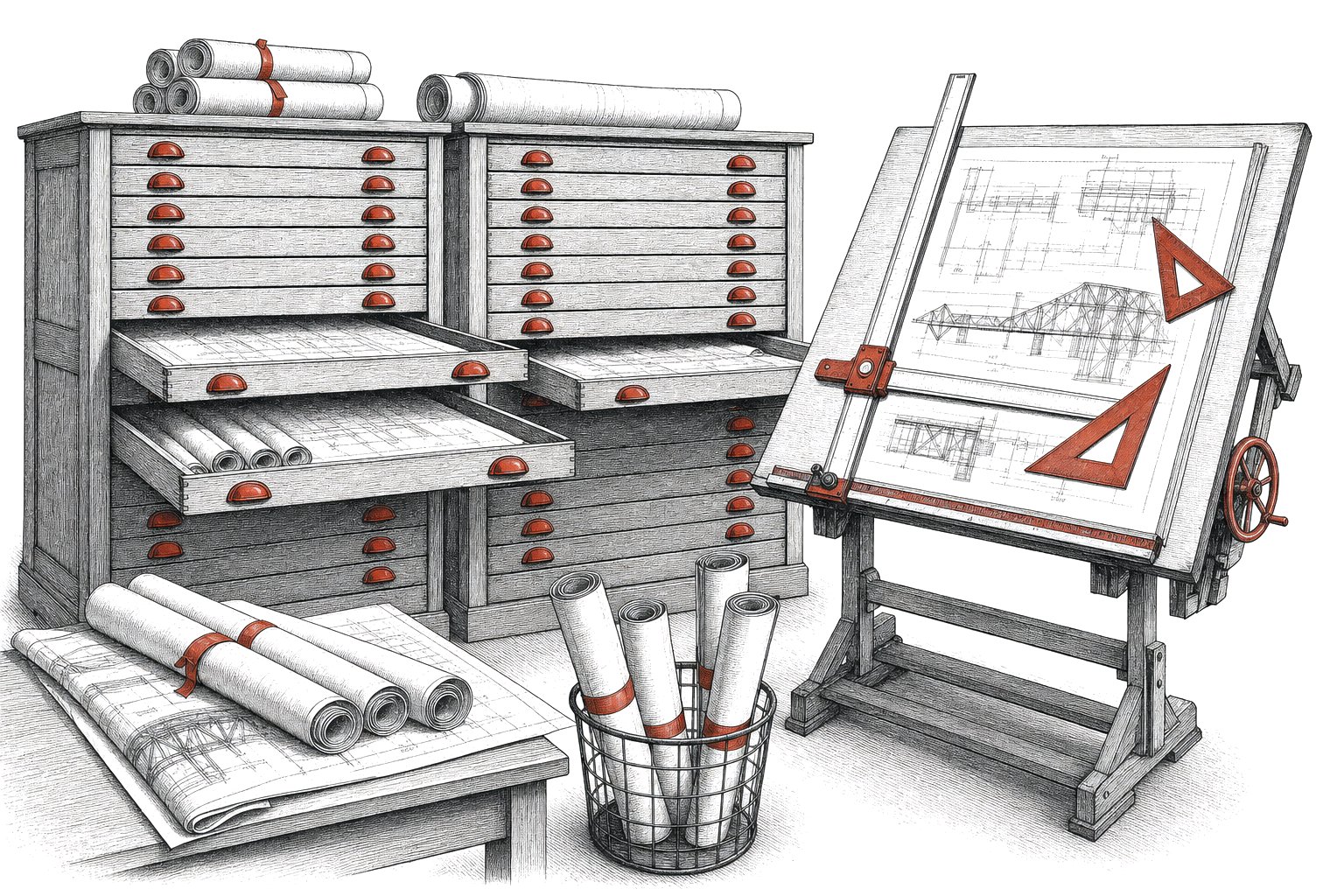
Sheets in this section.
04 entries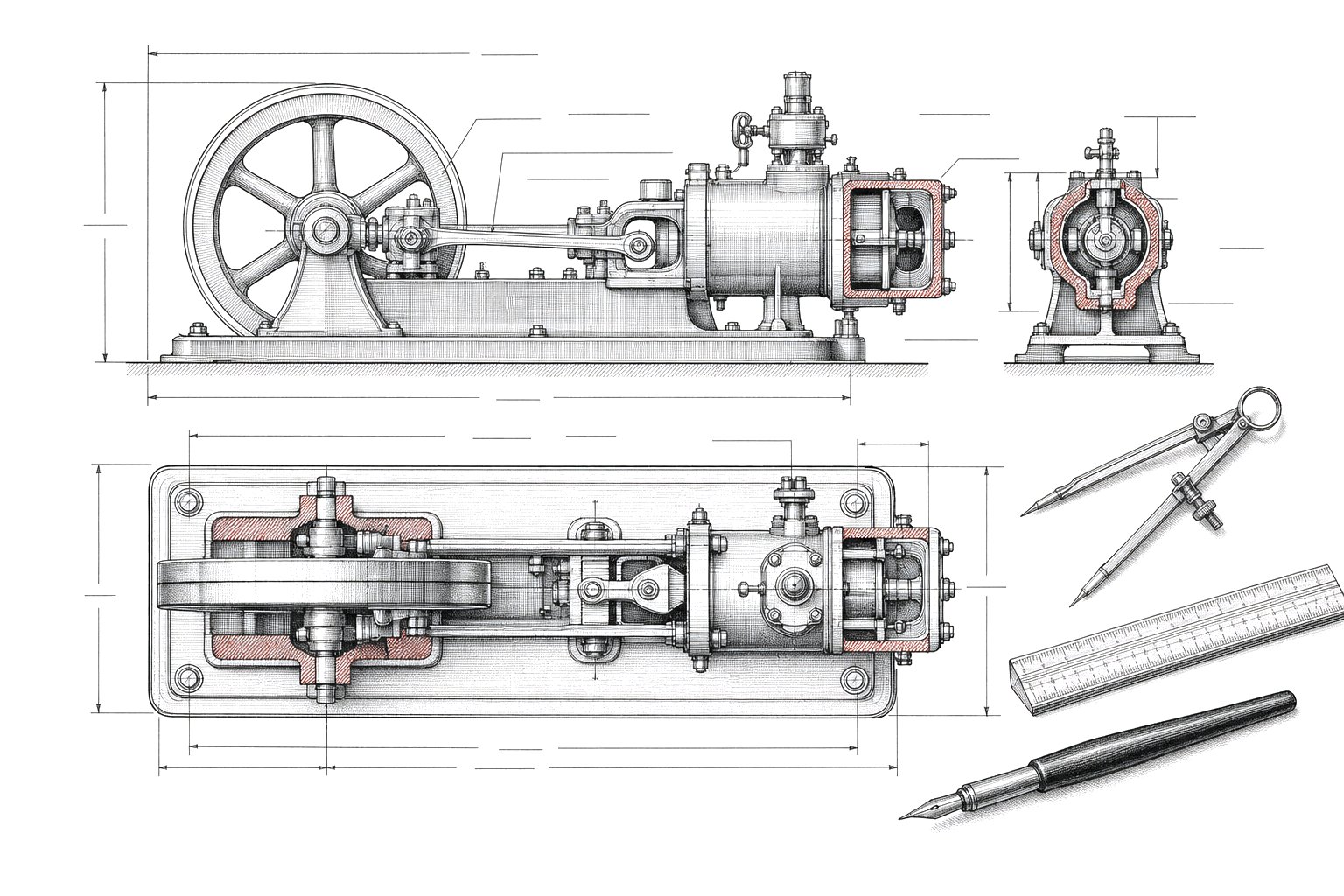
General arrangement drawing
A general arrangement shows a whole machine assembled, in several views on one sheet. Once you know where the plan sits and what the title block records, a Victorian locomotive drawing becomes readable.
Engineering Workshop Terms
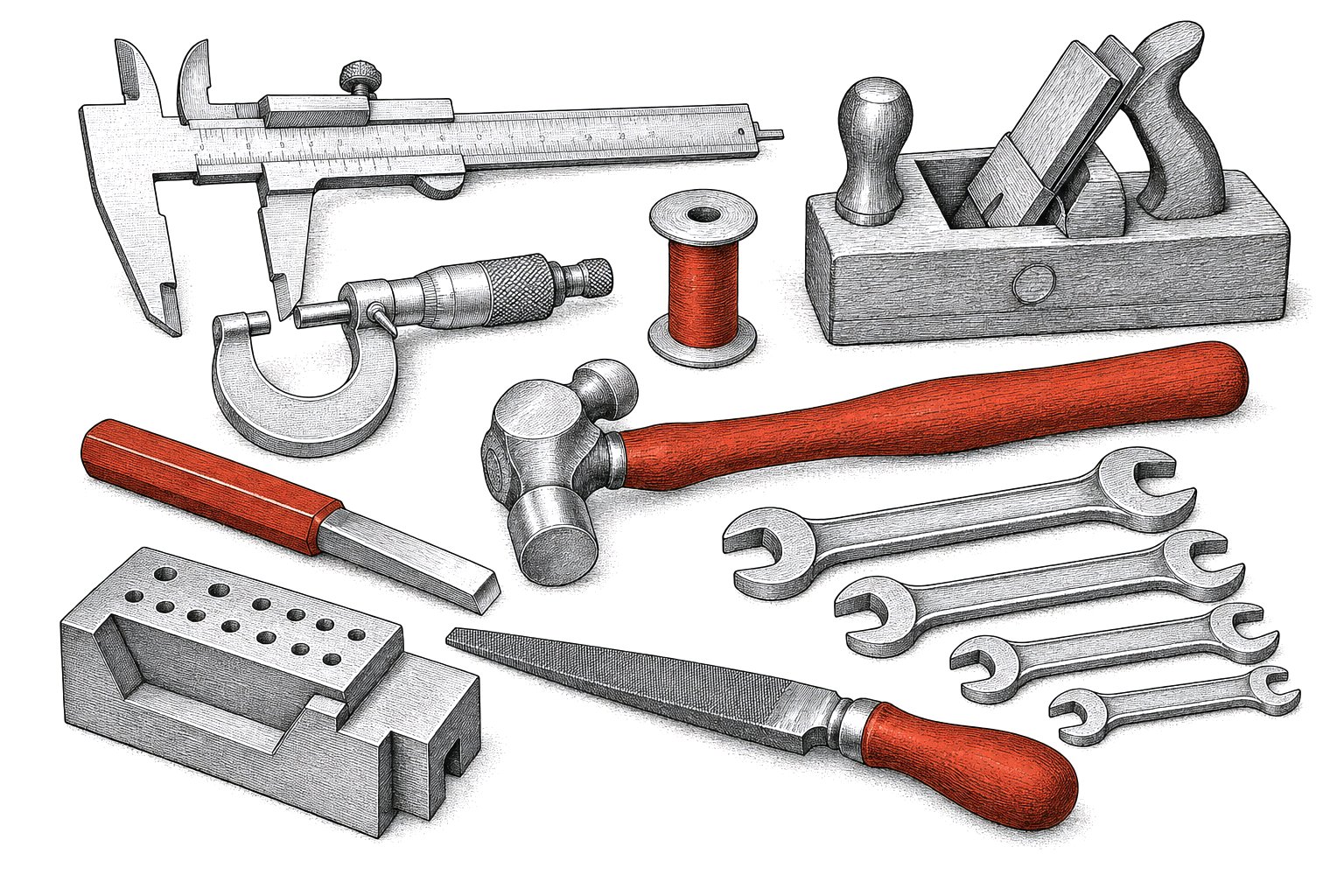
Wage books, census returns and works letters use job titles and shop words that nobody explains. This glossary decodes 34 of them, from the foundry floor to the spinning room.
Bed Warmer History
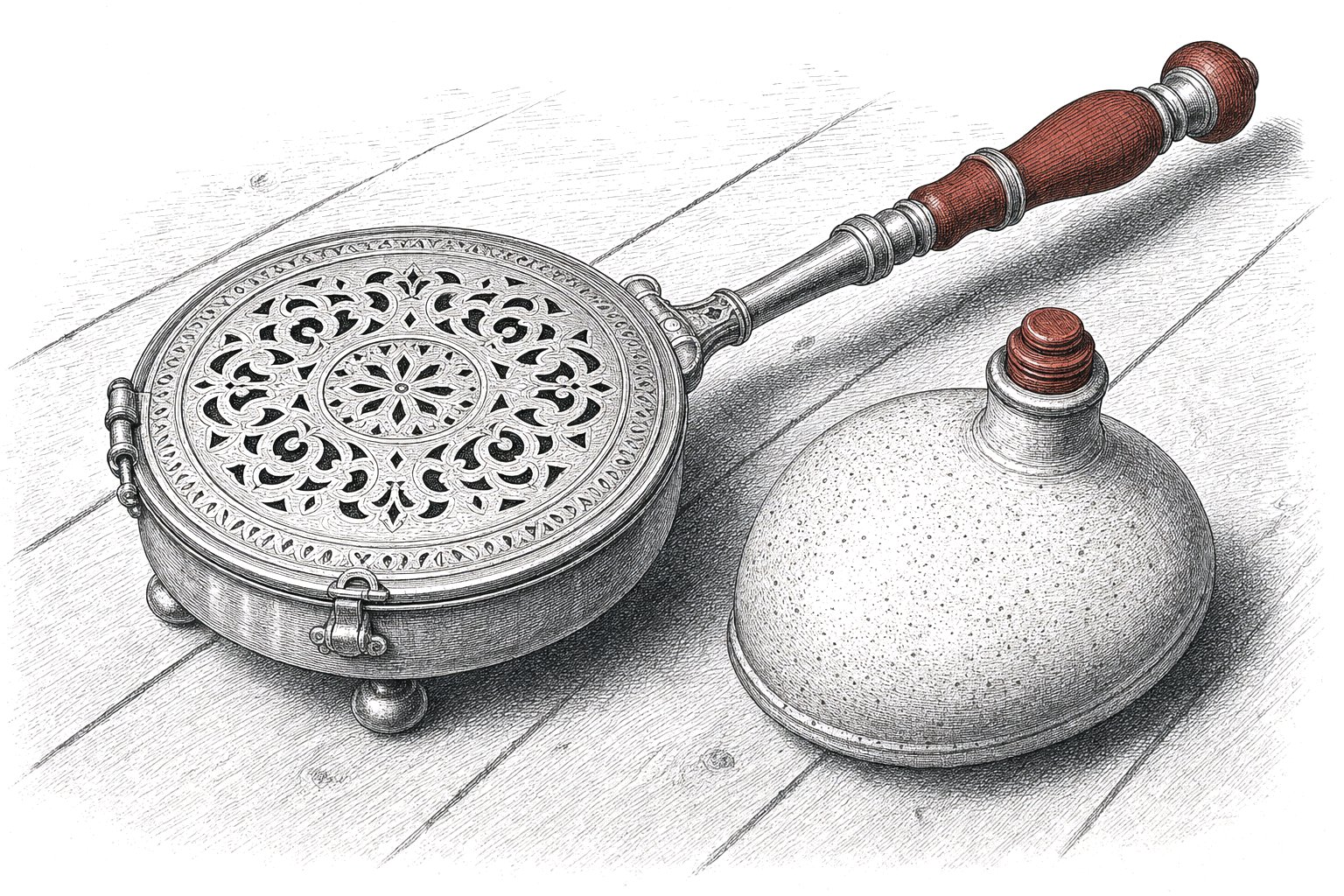
Before central heating, a cold bed was a problem with a tool for it. The tools changed from a long-handled pan of coals to a stoneware pig, a rubber bag and a wired blanket.
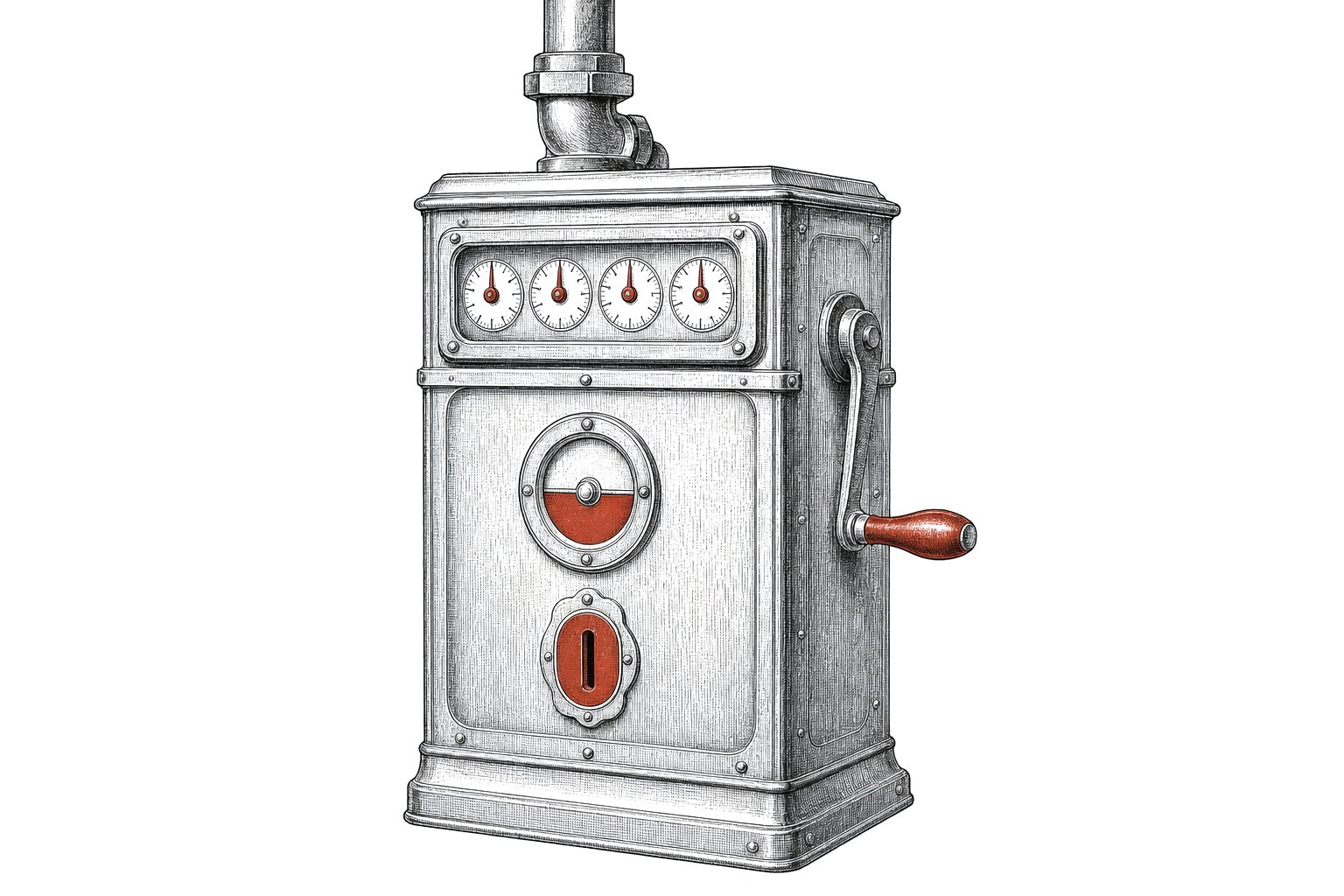
The Old Gas Meter
Early gas customers paid by the number of lights they had, not by what they burned. The meter changed that, and the coin slot on its front brought gas into the poorest houses.
Most Manchester engineering drawings that survive did so by accident. A firm closed, someone in the drawing office boxed up the tracings instead of burning them, and decades later the boxes reached a record office. The result is a scattered archive with no single front door. A boiler order from Dukinfield might sit in one building, the patent behind it in another in London, and the trade catalogue that advertised it somewhere else again. This hub sets out where the main bodies of material are, what each holds, and how to get a document in front of you.
Two companion pages cover the reading side. Reading a general arrangement drawing explains views, projection, scales and title blocks, and the language of the workshop decodes the job titles and shop terms that turn up in letterbooks and wage ledgers.
What survives from the drawing office
Engineering firms produced four kinds of record that matter to a researcher. Drawings came first: general arrangements showing a whole machine, detail drawings of single parts, and tracings on starched cloth from which blueprints were copied. Then come patents and registered designs, the legal record of what a firm claimed as new. Third are trade catalogues and price lists, printed to sell the product and often the only place a model number is matched to a picture. Last are the works records: order books, letterbooks, wage books and minute books.
Drawings are the rarest of the four. A busy works kept tens of thousands of sheets, and when a company was taken over the new owner had little reason to keep obsolete designs. What reaches an archive is often an index to drawings, a register listing sheet numbers and titles, rather than the sheets themselves. That index is still worth having. It tells you a drawing existed, when it was made, and sometimes which customer it was for.
The material itself also varies. Between about 1850 and 1960 most masters were inked on tracing cloth, a cotton or linen fabric sized with starch, which reacts badly to damp and mould. Copies were blueprints, white lines on Prussian blue, and later dyeline prints with dark lines on a pale ground. Archives treat tracing cloth with care, so expect restrictions on handling and photography.
Central Library and Archives+
The first stop for Manchester engineering drawings is Manchester Archives and Local Studies on the ground floor of Central Library, St Peter's Square, M2 5PD. The building, designed by E. Vincent Harris and opened by George V in 1934, reopened in March 2014 after a four-year refurbishment. Since then it has housed Archives+, a partnership that brought the Greater Manchester County Record Office in from its old home on Marshall Street, alongside the North West Film Archive, the Ahmed Iqbal Ullah RACE Centre and the Manchester and Lancashire Family History Society.
The holdings relevant to engineering are wide. The records of Daniel Adamson and Co, the Dukinfield boilermakers, are catalogued under B/ADM and cover 1851 to 1945: letterbooks, an order book, patents from 1852 to 1907, catalogues from 1869 to 1891, press cuttings and an index to drawings. Anyone researching the Lancashire boiler should start there. The record office also lists a set of drawings of Greater Manchester mills and mill engines, and the city council holds a large series of architectural plans covering buildings from 1890 to the 1980s, which are useful for the cotton mills and the engine houses attached to them. Plans from 1890 to 1958 can only be seen by appointment.
Original documents need at least one working day's notice. Microfilm is on open access. Expect the usual archive rules, pencils rather than pens, and ask staff before unrolling a large drawing.
A practical tip: the online catalogue lists collections at different levels. Search by firm name, then by place, then try the National Archives Discovery catalogue, which indexes many Greater Manchester collections and often shows a reference the local catalogue buries.
University and charitable libraries
The John Rylands Research Institute and Library on Deansgate, opened in 1900 and part of the University of Manchester since 1972, holds several hundred business archives. On the engineering side its special collections list the Simon Engineering Group archive, the papers of William Dale and Sons, and the B. R. Faunthorpe papers relating to Joseph Whitworth. Its railway holdings include the Kenneth Brown Railway Collection. Check its reader registration rules before visiting, as special collections items are ordered in advance.
Chetham's Library, founded in 1653 under the will of Humphrey Chetham, is a different proposition. It describes itself as the oldest free public reference library in the English-speaking world and holds more than 100,000 printed volumes, about 60,000 of them published before 1851. Its value for engineering history lies in early printed technical works and local material rather than works drawings. Contact the library before a research visit.
Outside the city centre, Tameside Local Studies and Archives holds a further group of Adamson material, pattern books, specifications and blueprints dated 1920 to 1935, under reference DD63. Borough archives across Greater Manchester often hold the records of firms that worked in their towns, so check Bolton, Oldham, Stockport and Wigan as well as Manchester.
Patents, designs and the national bodies
Patents are a national record, so the trail leads to London. The British Library's Business and IP Centre at St Pancras inherited the former Patent Office Library and holds more than 400 years of patent records, starting with the printed specifications for 1617 to 1852. Those early specifications are retrieved by number, so begin with the published name indexes. A free Reader Pass is required.
The National Archives at Kew holds a record of every design registered in the United Kingdom since 1839, with registers and representations up to 1991. Ornamental designs from 1842 to 1883 are in BT 43, and "useful" designs, which protected functional shapes, from 1843 to 1884 in BT 45. Manchester toolmakers and foundries used both. A registration usually includes a small drawing or tracing, which can be the only image of a product that has otherwise vanished.
The Institution of Mechanical Engineers at One Birdcage Walk, London, keeps an archive of drawings, notebooks and papers that includes Boulton and Watt material and drawings by James Nasmyth, whose Bridgewater Foundry stood at Patricroft from 1836. Access is by appointment on weekdays, and a selection is online through the IMechE virtual archive.
Online finding aids
Grace's Guide to British Industrial History is the best free starting point. Run by volunteers as a registered charity, it holds more than 147,000 pages on firms, engineers and products, drawn from trade directories, journal notices and obituaries. Use it to establish dates, addresses and changes of name before you visit an archive, then check the original. A page on Beyer, Peacock, for instance, will tell you when the Gorton works opened and who the partners were, which helps you read an order book correctly.
The National Archives Discovery catalogue covers more than its own holdings. It indexes collections in local record offices, universities and company archives across the country, so a single search for a firm name can show where its papers ended up. The Archives Hub does the same for university and specialist repositories, including the IMechE.
Reading what you find
A works letterbook is usually a press copy book: thin tissue pages onto which outgoing letters were copied by damp contact, so the ink is faint and reversed on the back. Order books record customer, date, specification and price, and they are the quickest way to date a machine whose maker's plate gives only a works number. Drawing registers list sheet number, title and date. Cross-check all three and a single surviving sheet among the Manchester engineering drawings you find can be placed in a firm's output with some confidence.
The vocabulary takes practice. Terms such as holder-up, tup and fettler appear without explanation in wage books, and the workshop glossary covers the common ones. For the drawings themselves, British practice followed BS 308, first issued in August 1927 as a short standard of 14 clauses, and before that the conventions of each drawing office. The general arrangement guide explains first-angle projection, which is how most British sheets were laid out, and why a plan can appear below an elevation rather than above it.
If a firm has left nothing in any catalogue, try the customer side. Mill owners, railway companies and corporations kept specifications and drawings for plant they bought, and a boiler or engine that disappeared from its maker's files may survive in a buyer's deposit at the borough record office.
Questions readers ask.
Notes / 05Q01Where can I see old Manchester engineering drawings?
The main public search room is Manchester Archives and Local Studies at Central Library, St Peter's Square, which also houses the Greater Manchester County Record Office. Many collections there include drawings or drawing indexes. Book a search room place at least one working day ahead, and quote the collection reference so the documents are fetched before you arrive.
Q02Do I need an appointment at Manchester Central Library archives?
For original archive material, yes. Documents are produced in the ground floor search room and need at least one working day's notice. Microfilm, such as census and newspaper film, is on open access and can be used without booking. Check the city council's archives page for current opening hours before travelling.
Q03Where are old British patents kept?
Printed specifications from 1617 onwards are held by the British Library's Business and IP Centre at St Pancras, which inherited the former Patent Office Library. You need a free Reader Pass. The older specifications are found by patent number, so search the name indexes first. The National Archives guide on patents of invention explains the pre-1852 indexes.
Q04What is the difference between a patent and a registered design?
A patent protected an invention, a way of making or doing something. A registered design protected the shape or ornament of a product. Design registers from 1839 are held by The National Archives at Kew, with ornamental designs in BT 43 and 'useful' designs, which covered functional shapes, in BT 45 for the Victorian decades.
Q05Is Grace's Guide a reliable source for engineering history?
Grace's Guide is a volunteer-run charity, registered in 2013, with more than 147,000 pages on British firms, engineers and products. It is an excellent starting point because it transcribes trade directories, obituaries and journal notices. Treat it as a finding aid, and confirm dates and figures against the original sources it cites.