Manchester Engineering History: The Machine Builders of a Working City
Manchester spun cotton, but it also built the mules, boilers, locomotives, turbines, aircraft and computers that made the twentieth century. This section follows the firms and the people behind them.
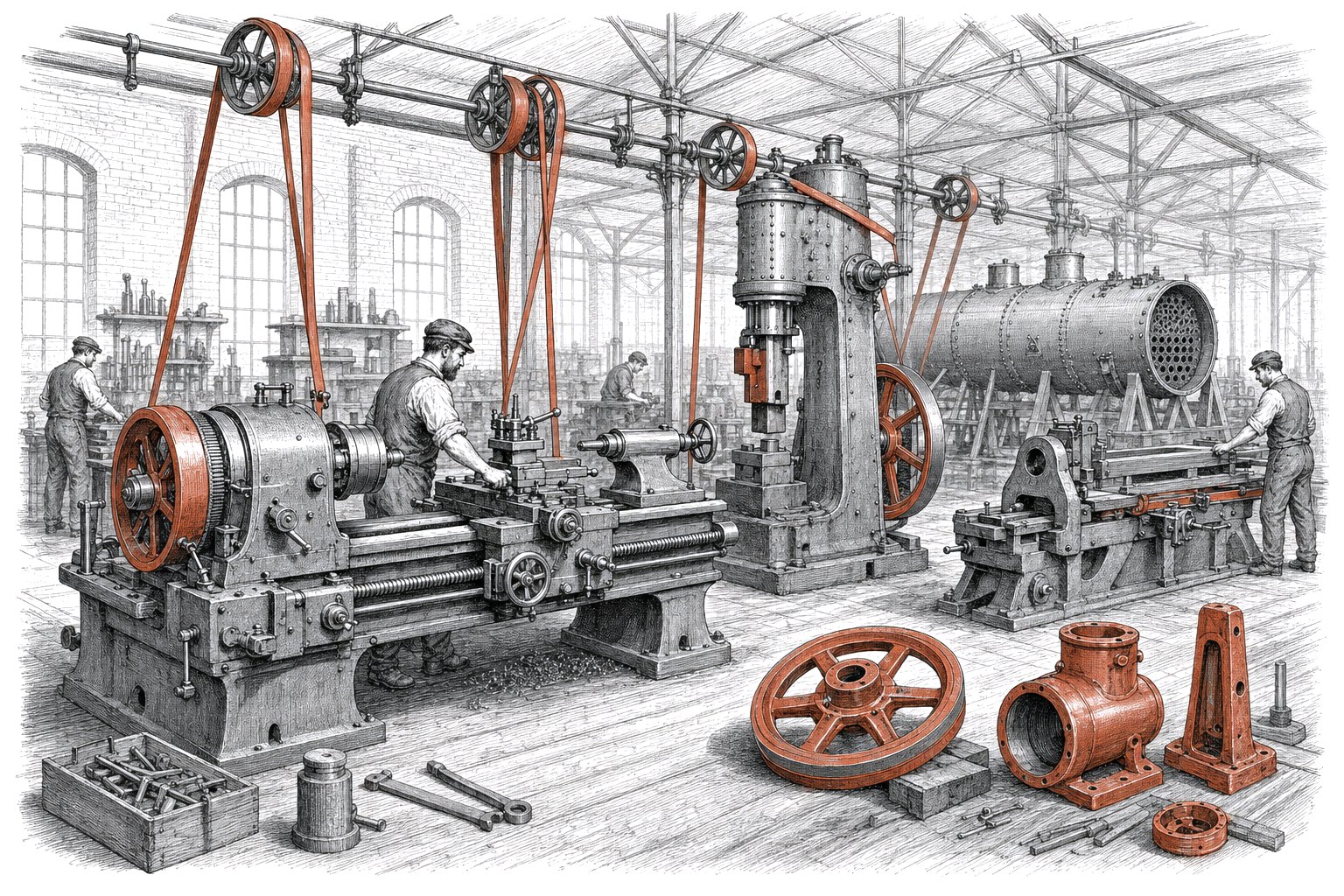
Sheets in this section.
08 entries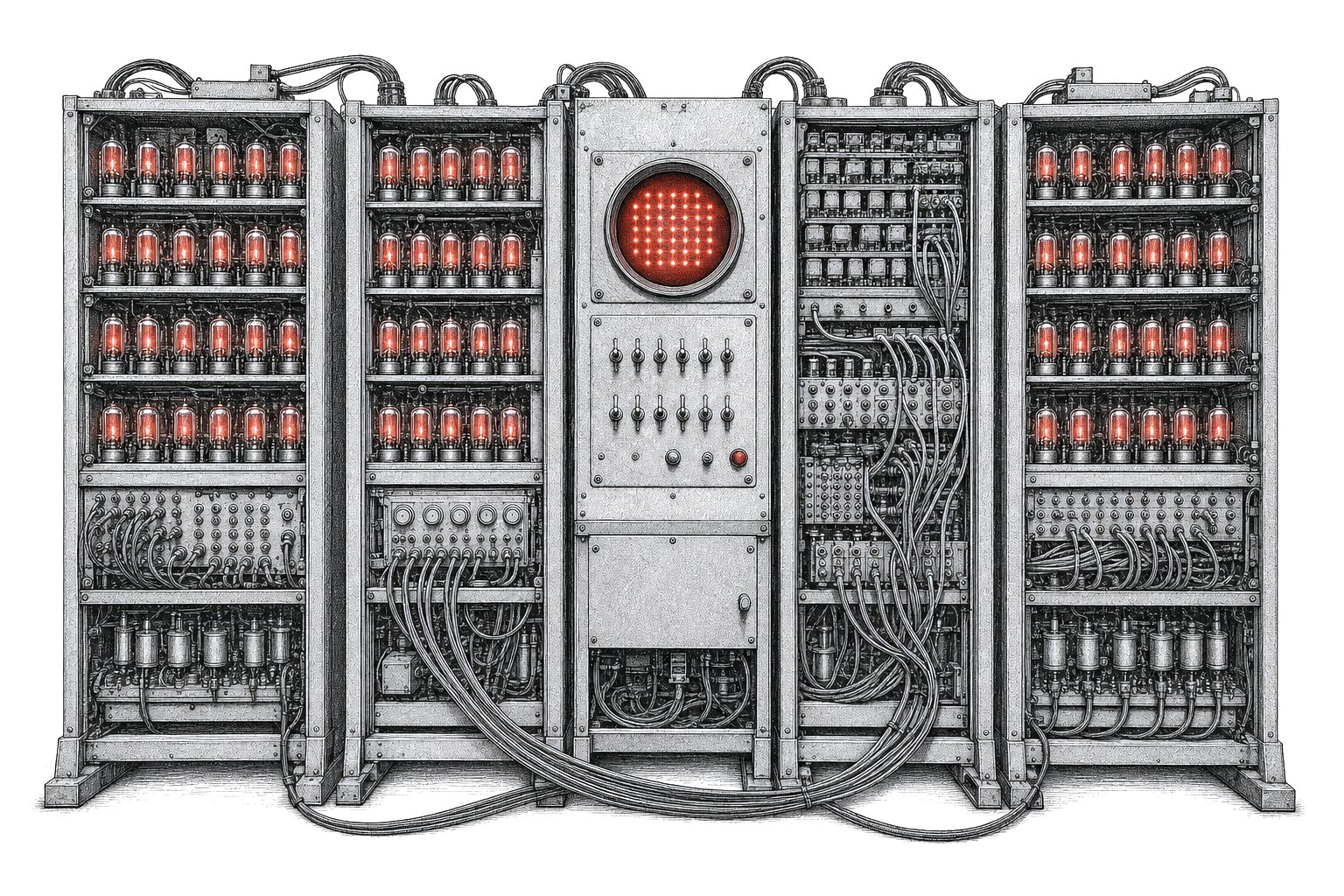
The Manchester Baby Computer
On 21 June 1948 a rack of war-surplus valves in a Manchester university laboratory ran a program stored in its own memory. It took 52 minutes to find one number.
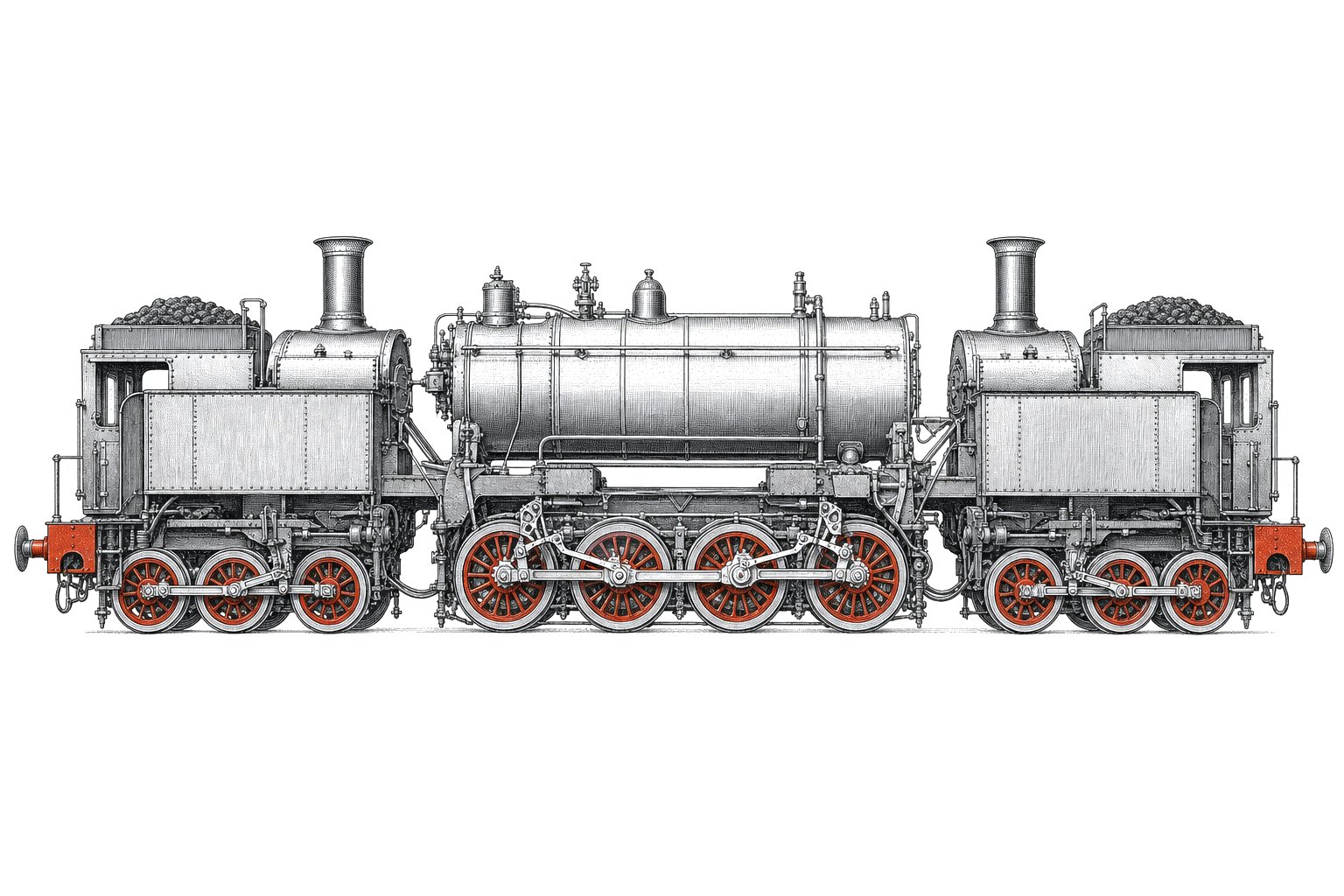
Beyer Peacock
For 112 years the Gorton Foundry in east Manchester sent steam locomotives to railways on five continents. Its best-known product bent in the middle.
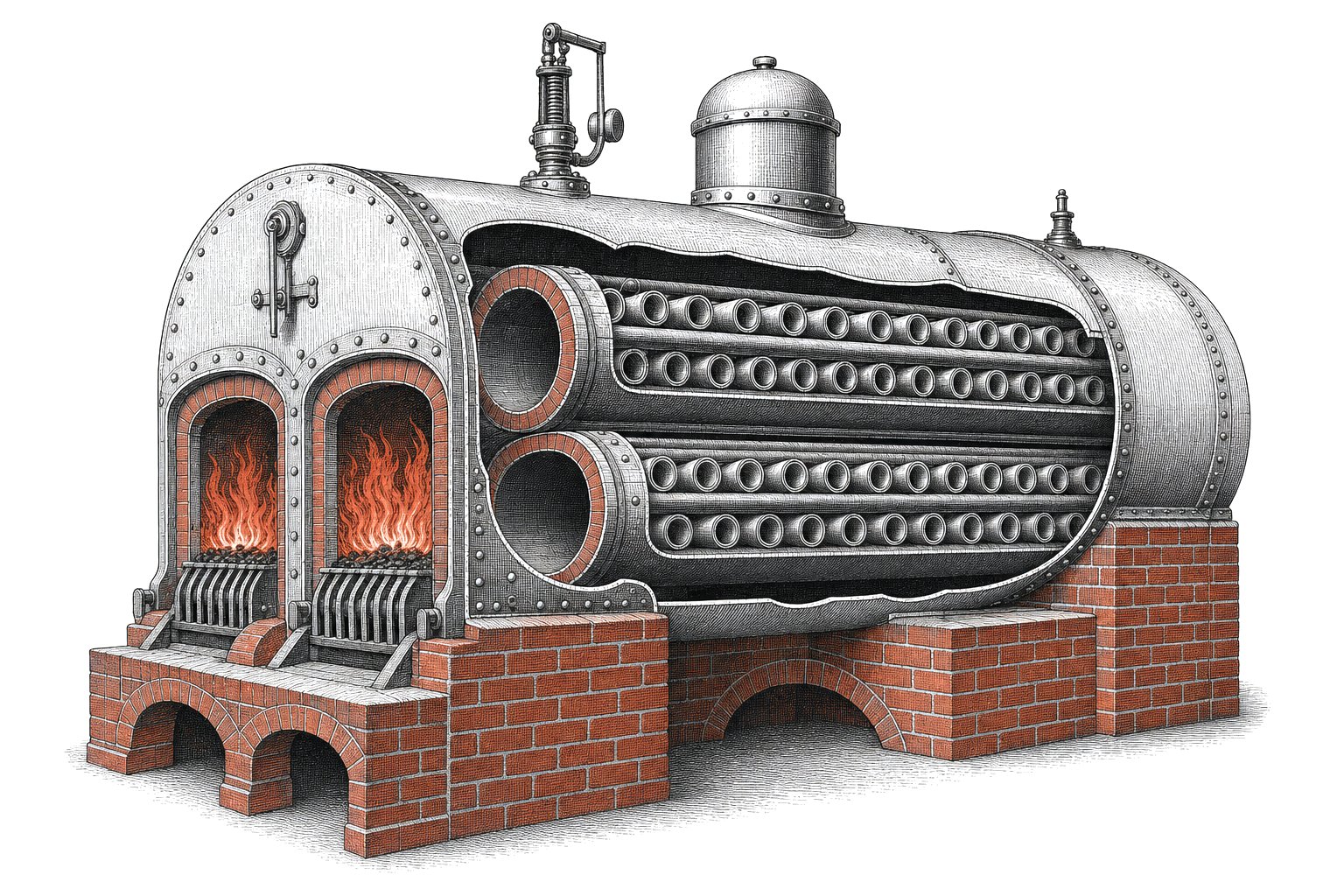
The Lancashire Boiler
A steel drum up to 30 feet long with two fires burning inside it: the Lancashire boiler raised the steam for the cotton mills of the north-west for more than a century.
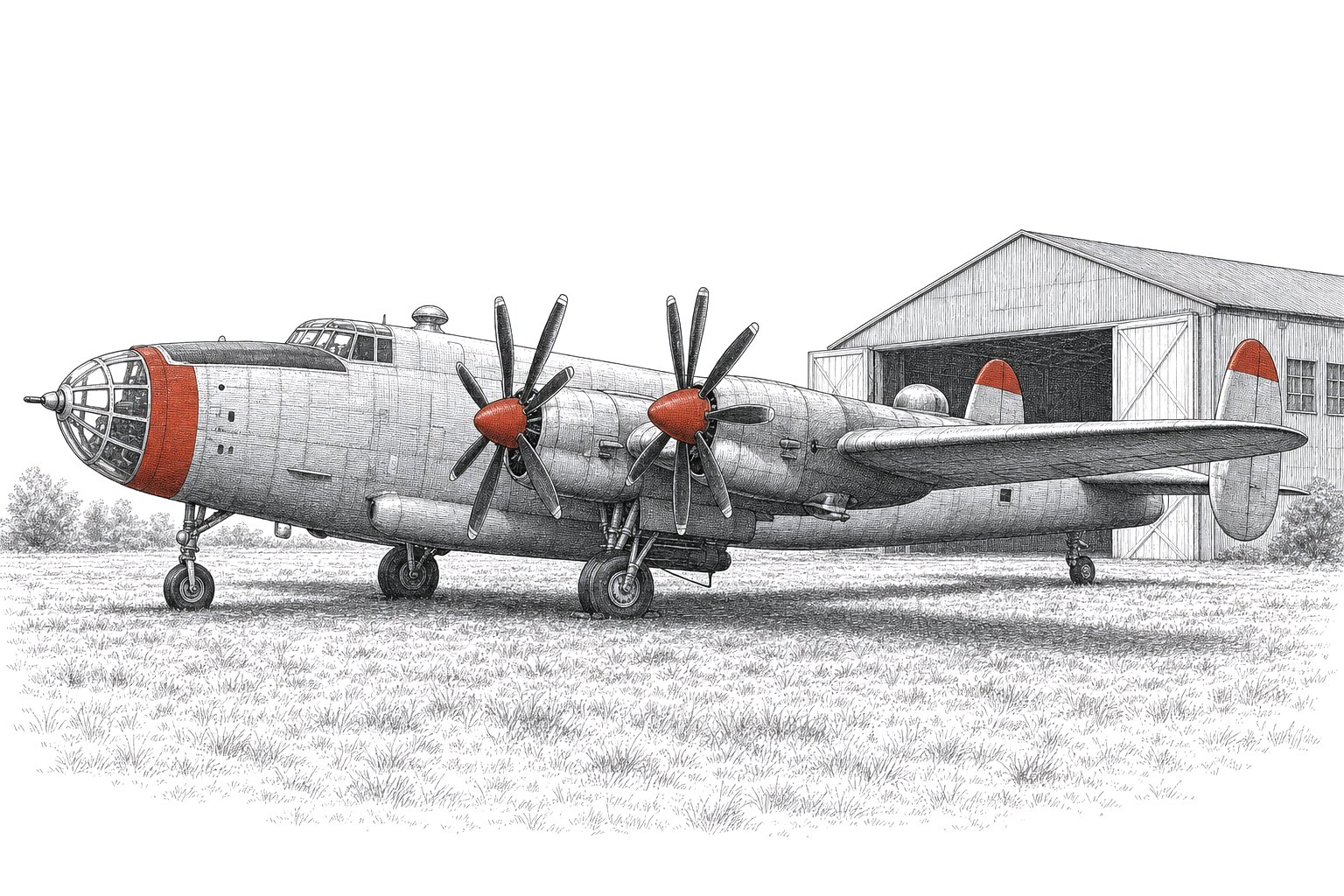
Avro Manchester
Britain's first aeroplane company started in an Ancoats cotton mill, paid for by a family business that made webbing and braces. Within thirty years it was building the Lancaster.
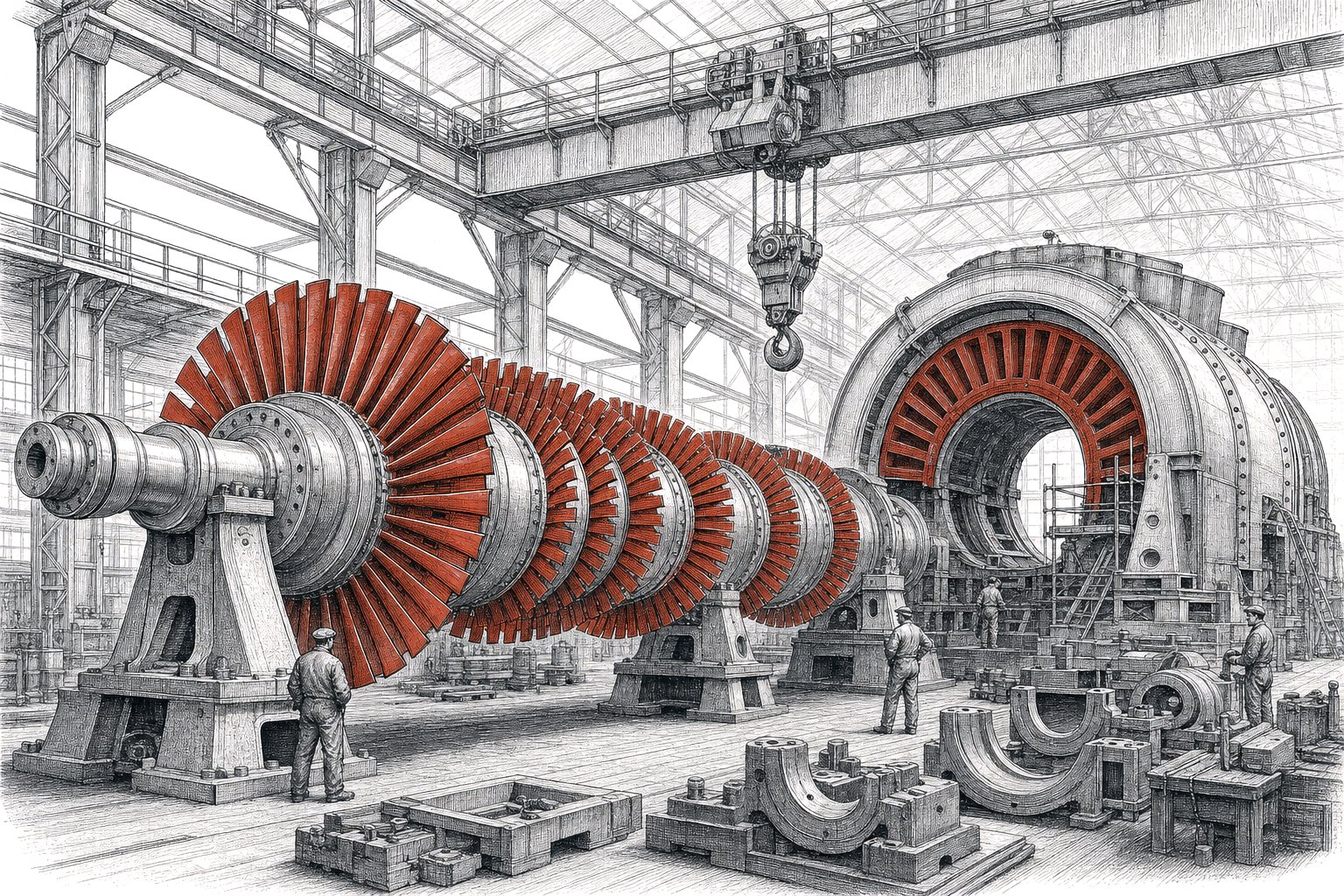
Metropolitan-Vickers
From 1902 a 130-acre works at Trafford Park built turbines, generators, radar, jet engines and bombers. At its wartime peak Metrovick employed 26,000 people there.
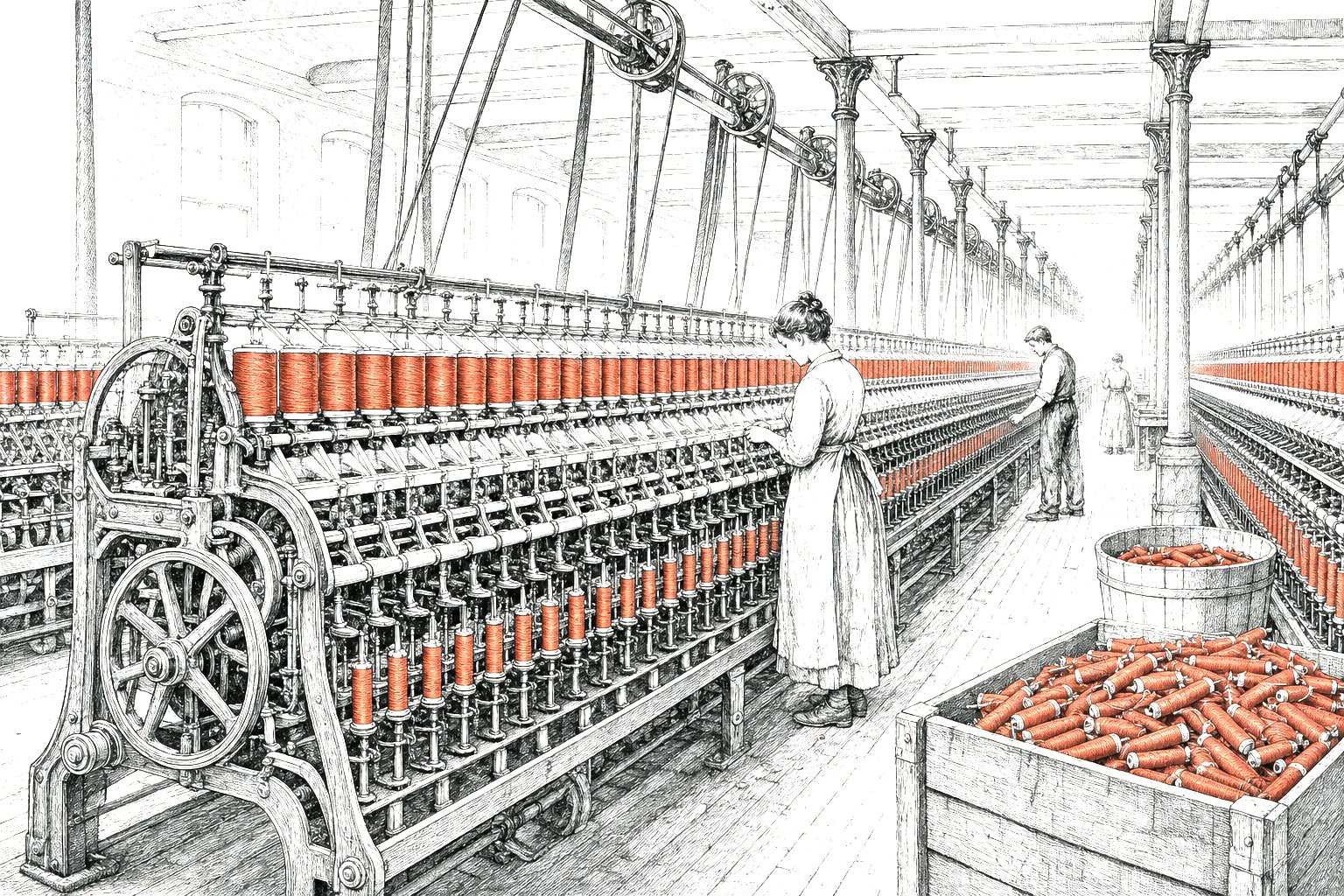
Manchester Cotton Mills
Manchester's mill count peaked at 108 in 1853. The oldest survivors still stand in Ancoats, beside the canal that brought them coal and raw cotton.
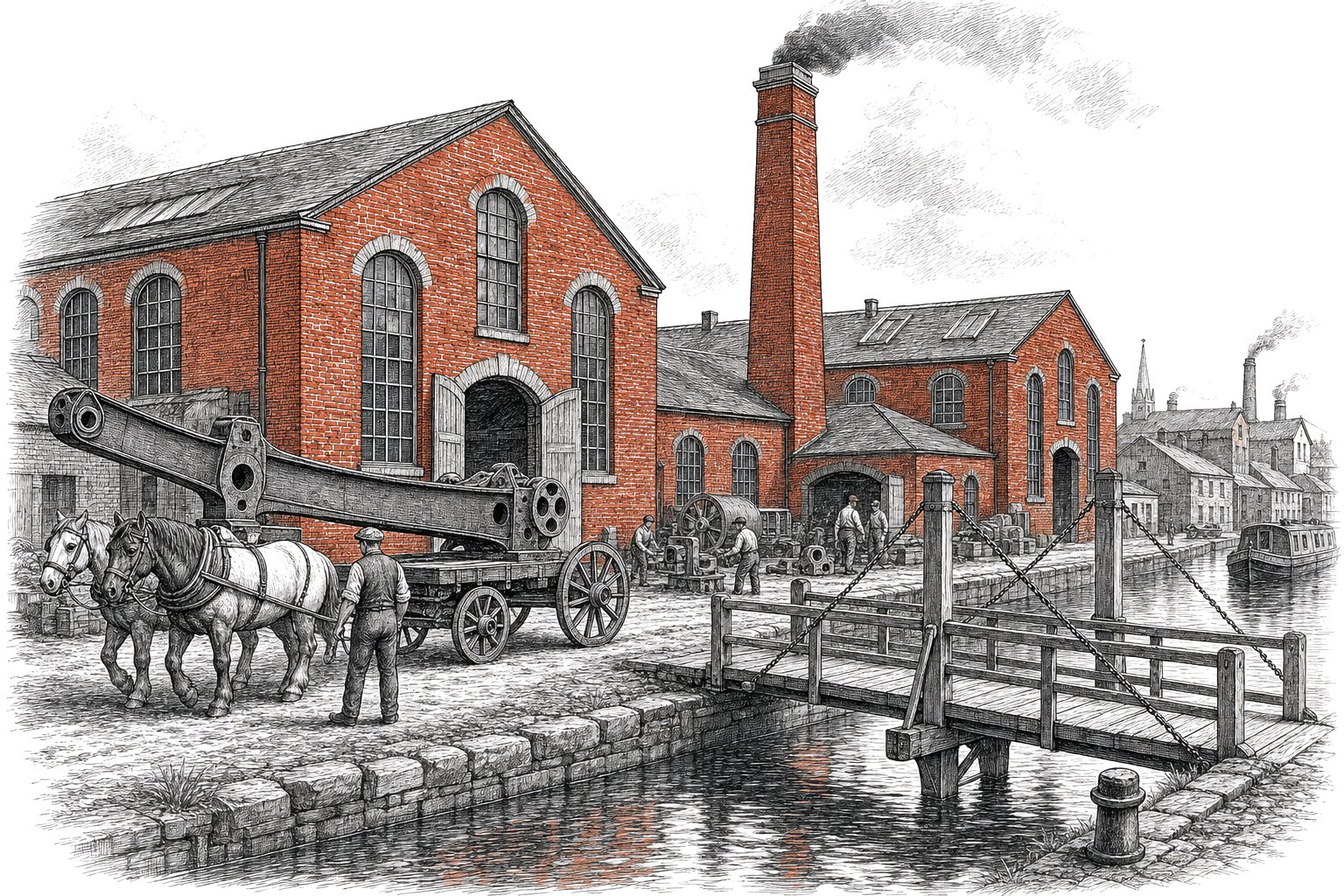
Soho Foundry, Ancoats
On Pollard Street, between the road and the Ashton Canal, Peel, Williams and Peel cast, forged and assembled steam engines for most of the nineteenth century. The works were auctioned in 1886 and 1887.
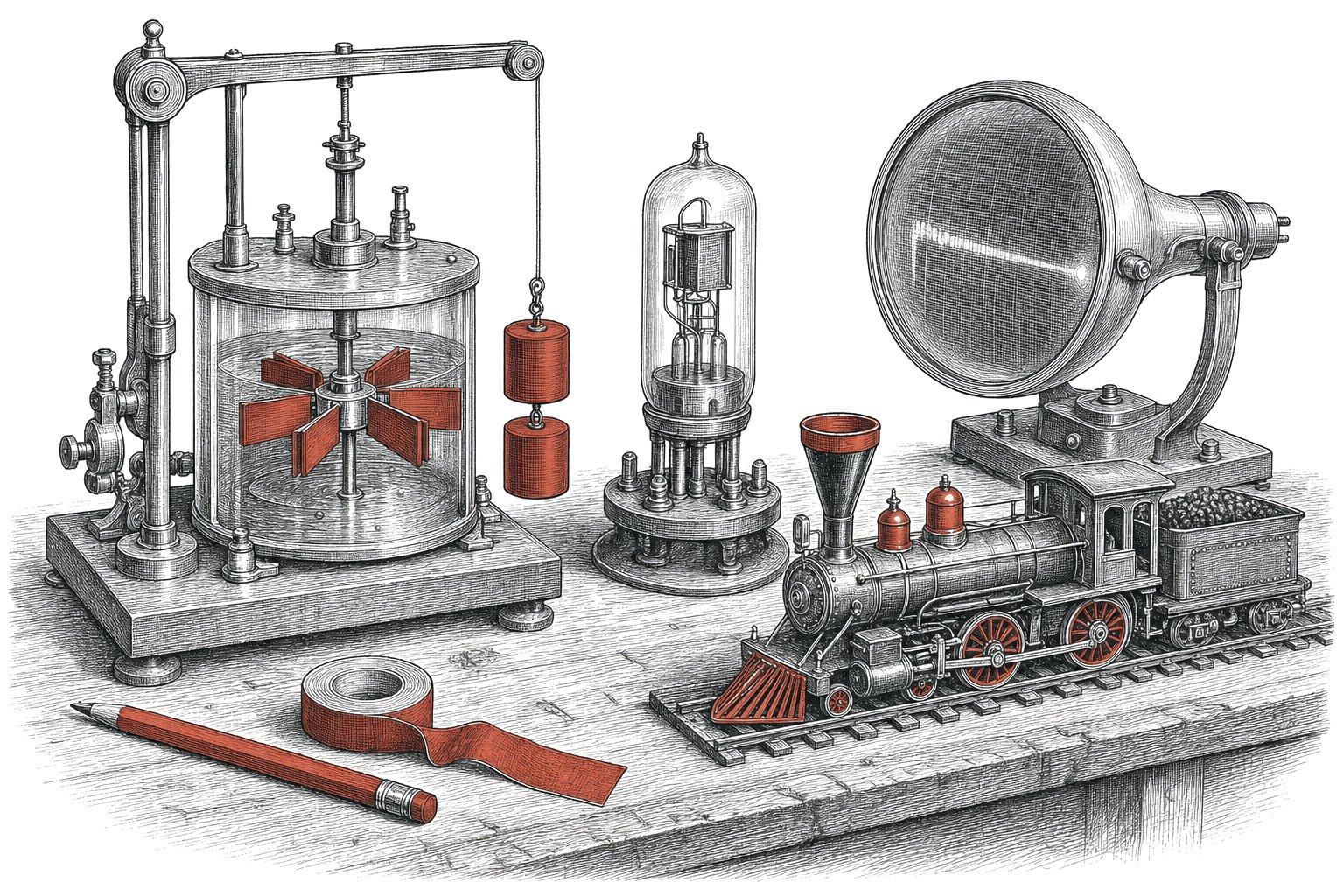
What Was Invented in Manchester
A canal that halved the price of coal, the first steam-hauled passenger railway, the first stored-program computer and a carbon sheet one atom thick. Manchester's list of firsts runs for 250 years.
In 1817 an engineer from Kelso called William Fairbairn and his partner James Lillie set themselves up in Manchester as engine makers. Within a generation the town that the world knew for cotton had also become one of its busiest places for building machines, and that second identity is the thread running through Manchester engineering history. Spinning mills needed mules, looms, shafts, engines and boilers. The workshops that supplied them learned to make lathes and planing machines, then locomotives, and the habit of building things lasted long after the cotton trade had moved to the surrounding towns.
This section of The Drawing Register follows that habit, and the wider Manchester engineering history behind it, from the 1810s to the 1960s. It is organised by machine and by firm rather than by date, because the same few streets in Ancoats, Openshaw, Gorton and Trafford Park turn up again and again.
From millwrights to machine makers
The early mill engineers were millwrights who worked in timber and cast iron and moved from job to job. Fairbairn and Lillie began as a mill-machinery business. Richard Roberts, born at Llanymynech in 1789, opened a small business at No. 15 Deansgate in 1816 as a turner of plain and eccentric work.
Roberts built a planing machine in 1817 to machine flat surfaces, which sounds modest and was not. Before machines like it, a flat iron surface was produced with chisel and file by a skilled fitter, slowly. A machine that planed iron made it possible to build other machines to repeatable dimensions, and that is where the Manchester machine-tool trade begins.
Textile machinery and Sharp Roberts
Cotton paid for most of this. Manchester's mill count peaked at 108 in 1853, and the mills of Ancoats are described on the Manchester cotton mills page. Roberts patented a power loom in 1822 and the self-acting mule in March 1825, a machine that could draw out and wind on yarn without a spinner guiding the carriage by hand. In May 1826 his business merged into Sharp, Roberts and Company, which made textile machinery and later locomotives until it closed in June 1852.
A single hire at Sharp, Roberts shaped the next century. Charles Beyer, born in Plauen in Saxony in 1813, joined in 1834 as a low-paid draughtsman, took over most of the locomotive design work and became chief engineer after Roberts retired in 1843.
Machine tools: Whitworth and Nasmyth
Joseph Whitworth, born in Stockport in 1803, started his own lathe and machine-tool business in Manchester in 1833. In 1841 he proposed a screw thread with a fixed 55 degree angle, which became the first nationally standardised thread system in Britain. His measuring machine of 1840 could resolve one millionth of an inch, although heat and handling limited its real accuracy to something coarser. His firm merged with W.G. Armstrong and Mitchell in 1897 to form Armstrong Whitworth.
West of the city, at Patricroft near Eccles, James Nasmyth and Holbrook Gaskell opened the Bridgewater Foundry in August 1836. Nasmyth sketched his steam hammer on 24 November 1839 and patented it in June 1842, building the first one at Patricroft that year. Railway companies had been ordering locomotives from the foundry since 1840. Nasmyth retired in 1856, aged 48, and spent the rest of his life on astronomy and photography in Kent.
Steam, boilers and the Gorton works
All of these works ran on steam, and steam needed boilers that would not explode. In 1844 Fairbairn and John Hetherington were credited with the two-flue design that became the standard in Lancashire mills; the Lancashire boiler page explains how it worked and how the Manchester Steam Users' Association began inspecting boilers after a meeting in 1854.
Beyer left Sharp, Roberts in 1853. The next year he, Richard Peacock and Henry Robertson began the Gorton Foundry on a 12-acre site in Openshaw, and its first engine left in July 1855. By the time production stopped in 1966 nearly 8,000 locomotives had been built there, many of them for railways in Africa, South America and Australia. The story, including the Garratt articulated engines, is on the Beyer, Peacock page.
Electricity, aircraft and the Baby
The twentieth century brought electrical engineering to the west of the city. British Westinghouse began making turbines and generators at Trafford Park in 1902; renamed in 1919, the company is better known as Metropolitan-Vickers, and at its wartime peak it employed 26,000 people on the estate.
Aircraft came from much smaller beginnings. A.V. Roe and Company was founded on 1 January 1910 in Brownsfield Mill on Great Ancoats Street, a cotton mill of about 1825, and grew into the maker of the Lancaster, the Shackleton and the Vulcan. The Avro page follows it from Ancoats to Chadderton and Woodford.
Then, on 21 June 1948, a machine at the Victoria University of Manchester ran a program held in its own memory, the first electronic computer to do so. The Manchester Baby page describes how the Williams tube stored its 32 words and what the first program calculated. Ferranti, which had moved to Hollinwood near Oldham in 1896, turned the university design into the Ferranti Mark 1 and delivered the first one in February 1951.
Cameras from Broadheath: Thornton-Pickard
Not every Manchester machine was large. In 1888 John Edward Thornton and Edgar Pickard started a camera business in Manchester, and in 1890 they moved it to Broadheath, near Altrincham, beside the Bridgewater Canal. Their first success was a roller-blind shutter that fitted in front of the lens, sold as the "Time and Instantaneous", and the firm went on to make plate cameras and the Ruby reflex series for professional and amateur photographers.
The First World War gave the Altrincham works a military trade. Thornton-Pickard built cameras for aerial reconnaissance and the Hythe gun camera, which was shaped like a Lewis machine gun and recorded a photograph instead of firing a round, so that air gunners could be trained and scored on the ground. In 1921 the company joined Amalgamated Photographic Manufacturers, and camera production at Broadheath had ended by the Second World War. Surviving cameras and shutters turn up in museum collections and at camera fairs, usually identified by the maker's plate on the front standard.
Where the threads cross
Read the firms side by side and Manchester engineering history looks less like a list of companies and more like one extended workshop, because the same names keep returning. Beyer trained under Roberts. Fairbairn tested the tubular girders for the Conwy and Britannia bridges, and Roberts built a punching machine, working on the Jacquard principle, to make the rivet holes for the Conwy bridge. Metrovick built 1,080 Avro Lancasters by the end of the Second World War, and in 1949 it formed a joint company with Beyer, Peacock to build non-steam locomotives. Ferranti's computer division later worked from a former steam locomotive factory in West Gorton.
One common misreading of the city is that engineering grew up after cotton declined. The dates say otherwise: Roberts patented his mule while the Ancoats mills were still being built, and Nasmyth was making locomotives at Patricroft before Manchester had reached its peak number of mills.
| Firm or works | Place | Founded | Best known for |
|---|---|---|---|
| Fairbairn and Lillie | Manchester | 1817 | Mill gearing, boilers |
| Sharp, Roberts and Co. | Manchester | 1826 | Self-acting mule, locomotives |
| Whitworth | Manchester | 1833 | Machine tools, standard thread |
| Bridgewater Foundry | Patricroft | 1836 | Steam hammer, locomotives |
| Beyer, Peacock | Gorton | 1854 | Locomotives, Garratts |
| British Westinghouse / Metrovick | Trafford Park | 1899 | Turbines, generators |
| A.V. Roe and Co. | Ancoats | 1910 | Lancaster, Vulcan |
| Ferranti | Hollinwood | 1896 (move) | Ferranti Mark 1 |
Whitworth's name stayed on the map in a different form: under his will, the Whitworth Art Gallery and Whitworth Park were established after his death, and the Whitworth Scholarships he founded in 1868 are still awarded with the Institution of Mechanical Engineers.
Questions readers ask.
Notes / 05Q01Why is Manchester important in engineering history?
Manchester combined a huge cotton trade with a large community of machine builders. Richard Roberts, Joseph Whitworth, James Nasmyth and William Fairbairn all ran works in or near the city, and later firms such as Beyer, Peacock, British Westinghouse (Metropolitan-Vickers), Avro and Ferranti built locomotives, turbines, aircraft and computers there. The first stored-program computer ran at the university in 1948.
Q02What was made in Manchester during the Industrial Revolution?
Beyond cotton yarn and cloth, Manchester made the machines that produced them: spinning mules, power looms, mill engines and boilers. Machine tools such as lathes and planing machines came from Roberts and Whitworth, and steam hammers and locomotives from Nasmyth's Bridgewater Foundry at Patricroft, just over the boundary in Salford.
Q03Who was Joseph Whitworth?
Joseph Whitworth (1803-1887) was a Stockport-born engineer who started a machine-tool business in Manchester in 1833. In 1841 he proposed a screw-thread standard with a fixed 55 degree angle, the first nationally standardised system. His firm later merged with Armstrong's in 1897 to form Armstrong Whitworth.
Q04What was the first computer built in Manchester?
The Small-Scale Experimental Machine, known as the Manchester Baby, ran its first program on 21 June 1948 at the Victoria University of Manchester. It was built by Frederic Williams, Tom Kilburn and Geoff Tootill and was the first electronic computer to run a program held in its own memory.
Q05Where was Trafford Park and what was made there?
Trafford Park is an industrial estate west of Manchester city centre, next to the Manchester Ship Canal. British Westinghouse began making turbines and electric generators there in 1902. The works became Metropolitan-Vickers in 1919 and later built radar, jet engines and Lancaster bombers. Ford also assembled the Model T at Trafford Park from 1911.