Manchester Energy History: Water, Coal, Steam, Gas and Electric Power
Before the National Grid, Manchester made its own power: wheels on the Irk, coal from pits inside the city boundary, gas from the Police Commissioners and high-pressure water piped under the streets.
Sheets in this section.
04 entries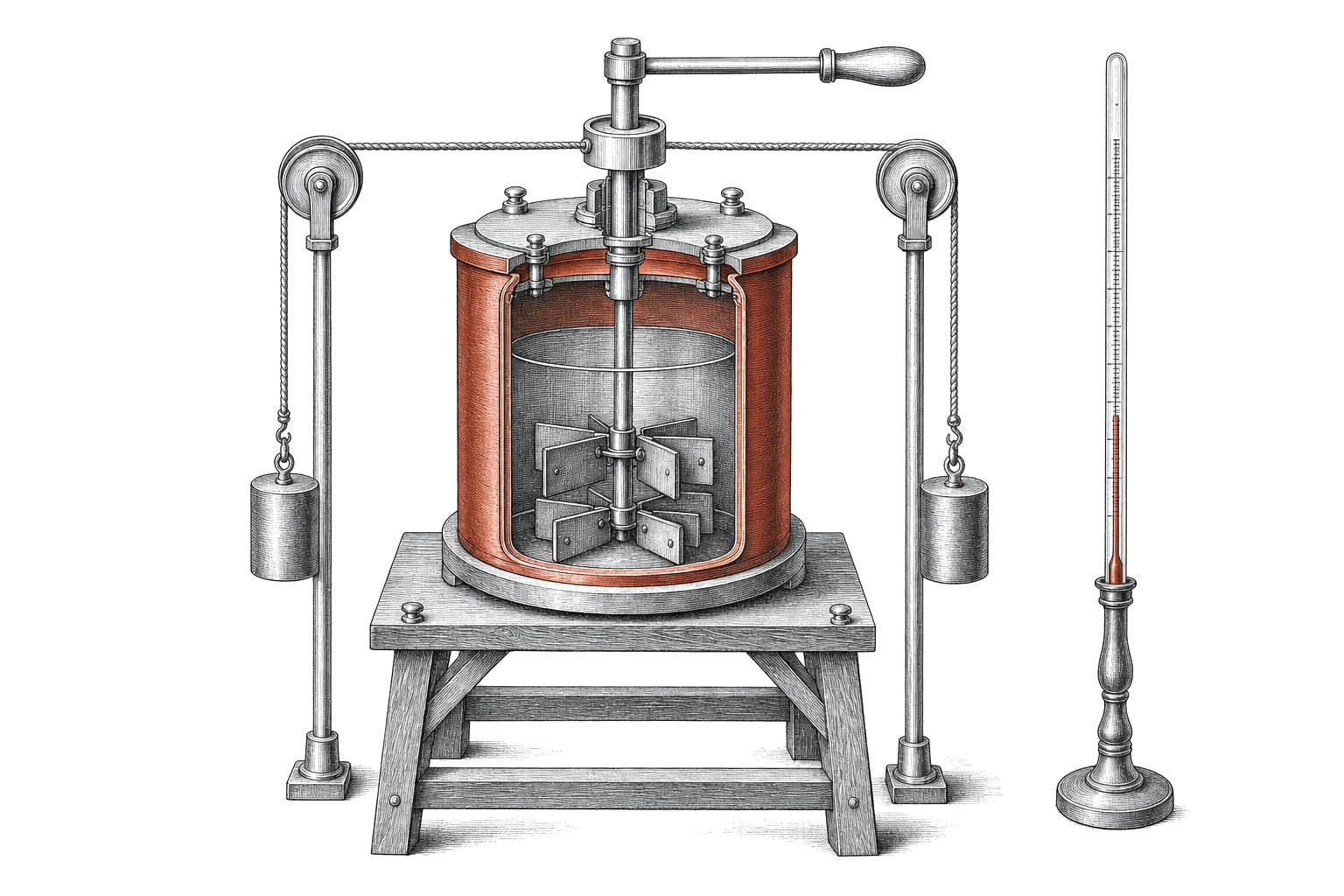
James Joule and the Mechanical Equivalent of Heat
A brewer's son who never held a university post put a number on the exchange rate between work and heat, and the SI unit of energy now carries his name.
Power Stations in Greater Manchester
From a half-square-mile DC network in 1893 to an 884 MW gas plant on the Ship Canal, Greater Manchester has made its own electricity on at least twenty sites.
The Manchester Coalfield
Coal was dug inside the Manchester boundary until 1968, from shafts more than 900 yards deep, about two miles from the city centre. The field fed mills, gasworks and power stations for two centuries.
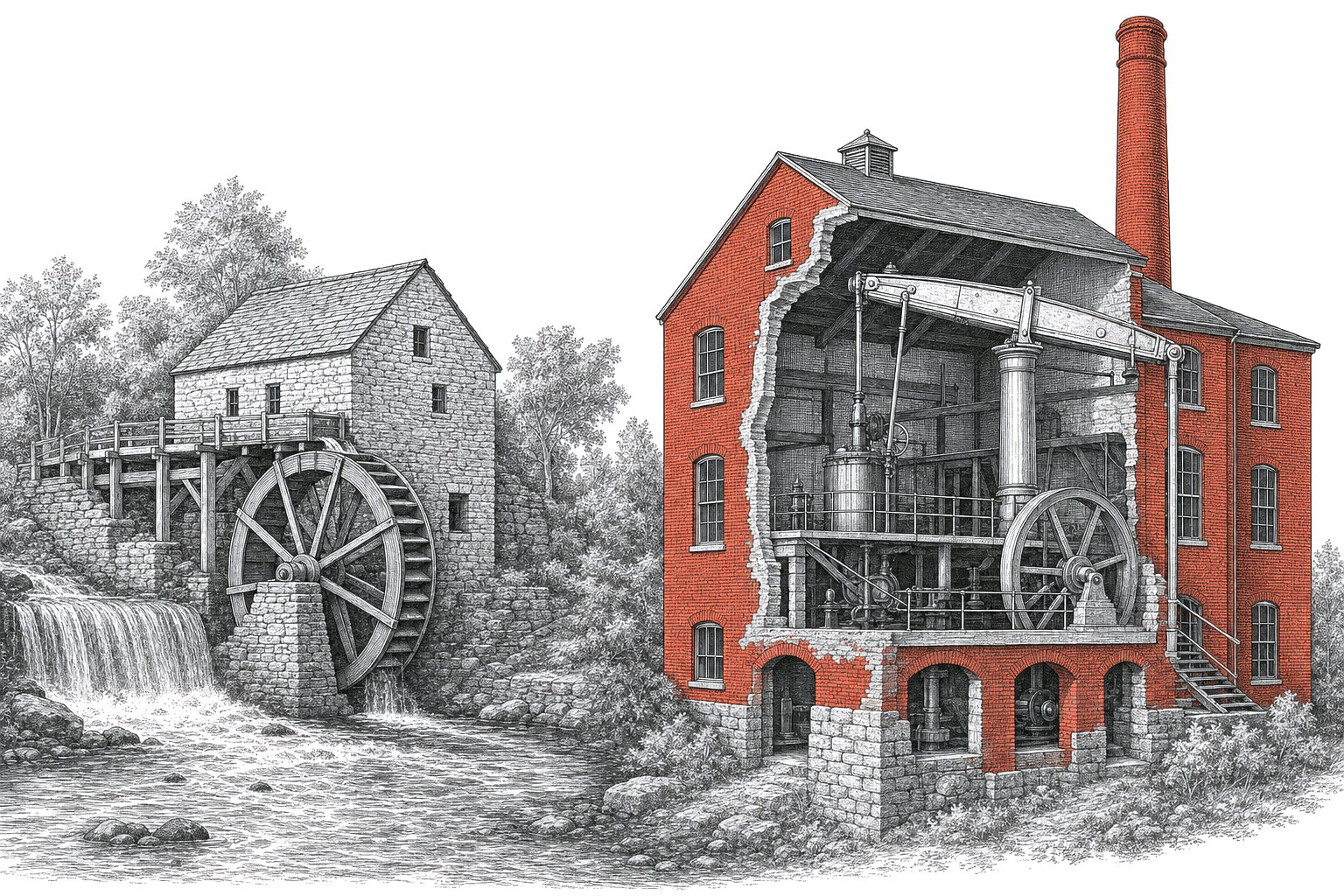
Water Power to Steam Power
Manchester's first big cotton mill ran on a waterwheel fed by a steam pump. Within forty years the wheel had gone and the engine drove everything, because steam let a mill stand next to its coal and its workers.
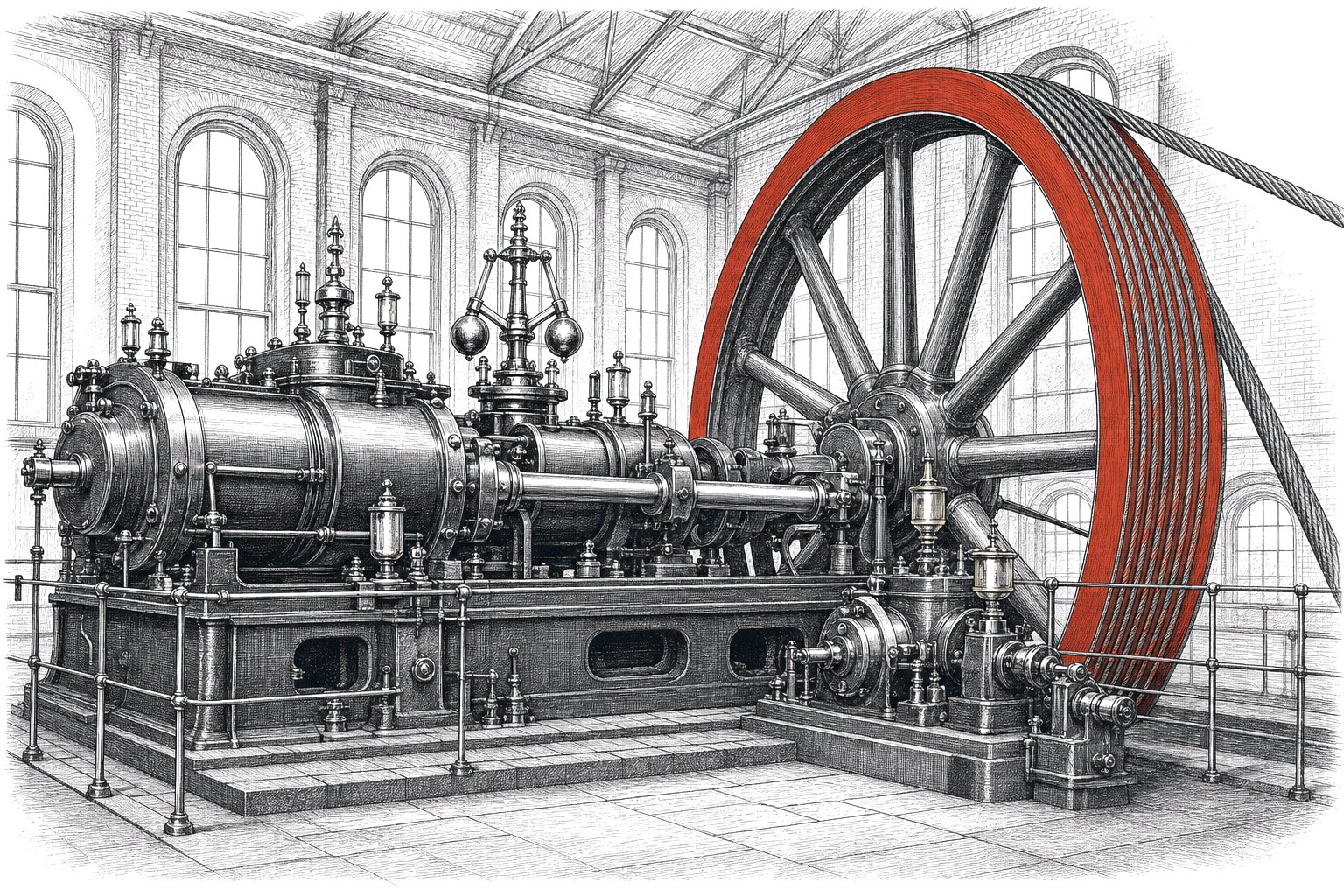
Most histories of Manchester energy history start with the steam engine, which makes sense for the 1830s but misses the order things really happened in. Water came first and lasted longer than people expect. Gas lit the streets before most mills had a second engine. And for eighty years a separate pressurised water network ran under the city centre, quietly lifting bales and goods while electricity was still finding its feet.
The pages in this section follow each of those systems in turn, and this one is the map of Manchester energy history from the first mill engine to the last coal-fired station.
Wheels on the Irk and the first engines
Manchester was a poor place for water power. The Irk, the Irwell and the Medlock fall gently through the town, so the classic water-powered spinning mill grew up on faster streams in the Pennine valleys, or at places like Styal on the Bollin. When Richard Arkwright and his partners built the five-storey Shudehill Mill in 1782, they had to cheat: a 30 ft waterwheel turned the machinery, and a Newcomen-type atmospheric engine pumped the spent water from a lower pond back up to the top one. That hybrid is the start of the story told in when water gave way to steam.
Eight years later Peter Drinkwater's mill near Piccadilly had an 8 hp Boulton and Watt engine working by May 1790, the first in Manchester to drive cotton machinery directly. By 1800 the town had 42 mills. The reason they could cluster so tightly around Ancoats was not the river at all. It was coal.
Not every engine came from Birmingham. Benjamin Hick, who had been a partner in the Union Foundry of Rothwell, Hick and Rothwell in Bolton, set up his own works there in 1833 as Benjamin Hick and Son. The firm built stationary engines for Lancashire mills and a number of early locomotives. After Hick died in 1842 his son John carried it on, and once William Hargreaves joined as partner it traded as Hick, Hargreaves and Co., building mill engines in Bolton for more than a century. Many of the engines that turned Manchester's spinning floors were made twelve miles up the road.
Coal under the city
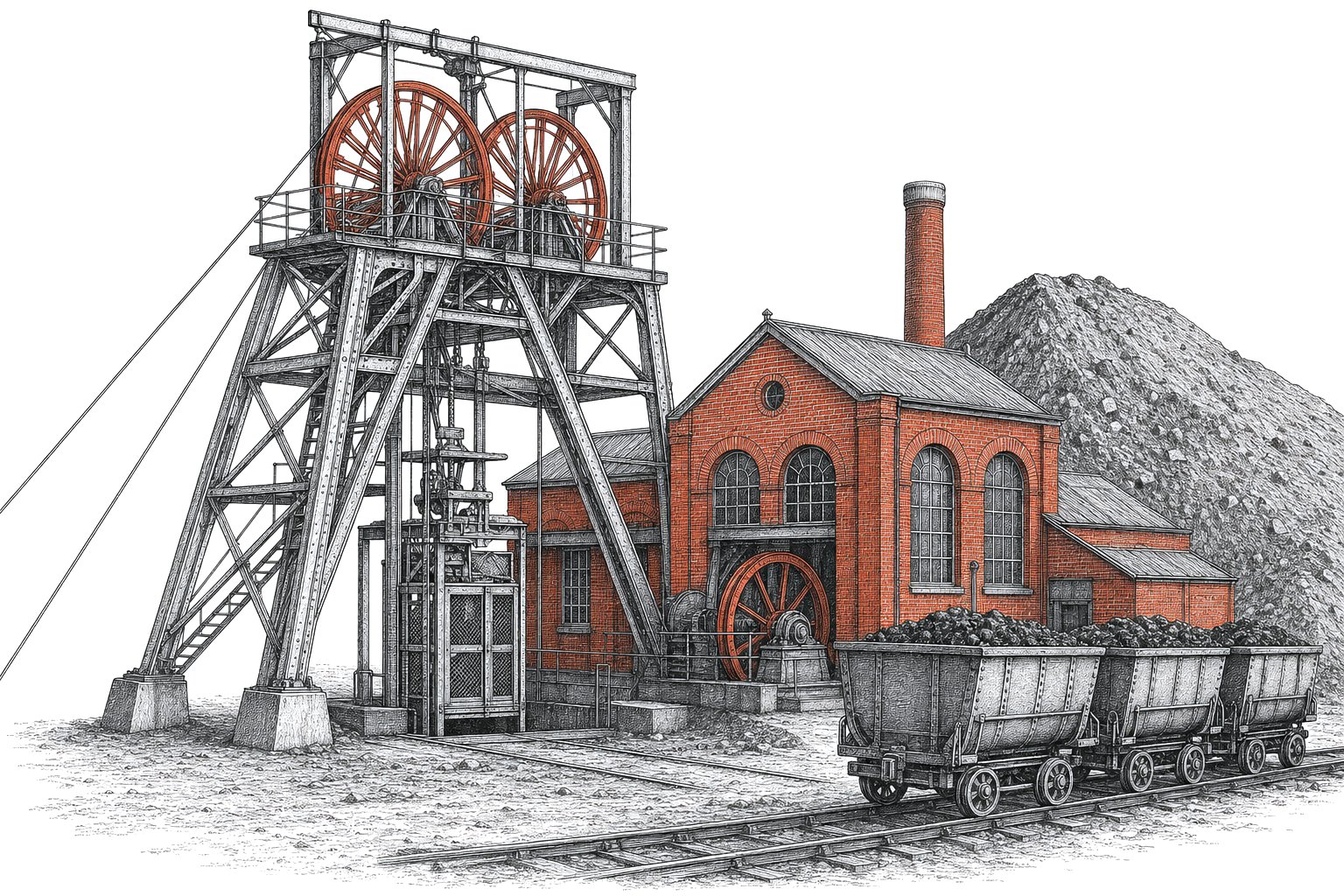
The Manchester Coalfield is the eastern end of the South Lancashire field, and its seams came close enough to the surface in the Irwell valley to be dug from the Middle Ages onward. The Duke of Bridgewater's underground canals at Worsley, 46 miles of them by 1887, fed the Bridgewater Canal and made cheap coal a Manchester commodity. Pendleton Colliery supplied about a quarter of the town's demand in 1836.
The surprise for most readers is how late mining inside the modern city lasted. Bradford Colliery, about two miles east of the city centre, was still raising more than half a million tons a year when it closed in 1968. The full picture, with the disasters at Clifton Hall and the Pretoria Pit, is on the Manchester coalfields page.
Gas, the first public utility
Gas came to Manchester through the police. The Manchester Police Commissioners, the town's improvement body before incorporation, began making gas on a small scale in 1807 to light their own offices, and in 1817 built a works on Water Street to supply street lamps. When the new borough council took over the undertaking in 1843, Manchester became one of the first towns in Britain to own its gas supply outright rather than leave it to a private company.
Water under pressure: the 1894 hydraulic main
Here is the system most visitors to the city centre walk over without knowing it. The Manchester Hydraulic Power Company network was commissioned in 1894, with equipment supplied by Edward Ellington's company, and pumped water at 1,120 psi through cast iron mains beneath the streets. Six sets of triple-expansion steam engines, each of 200 hp, drove the pumps at the first station on Gloucester Street near Oxford Road. Later stations followed on Water Street and Pott Street.
A warehouse owner simply tapped the main. The pressure worked cranes, lifts, hoists and, overwhelmingly, the presses that squeezed finished cotton goods into bales for export. At its peak in the 1930s the network ran to about 35 miles of pipe and served around 2,400 machines. Electric motors slowly made it pointless, and it shut in 1972. The Water Street pumping station, a Baroque-style building of 1907-1909 on the Irwell, survives and has been part of the People's History Museum since 1994, so you can still see the outside of a hydraulic power house in the city centre today.
Electricity: Dickinson Street to Agecroft
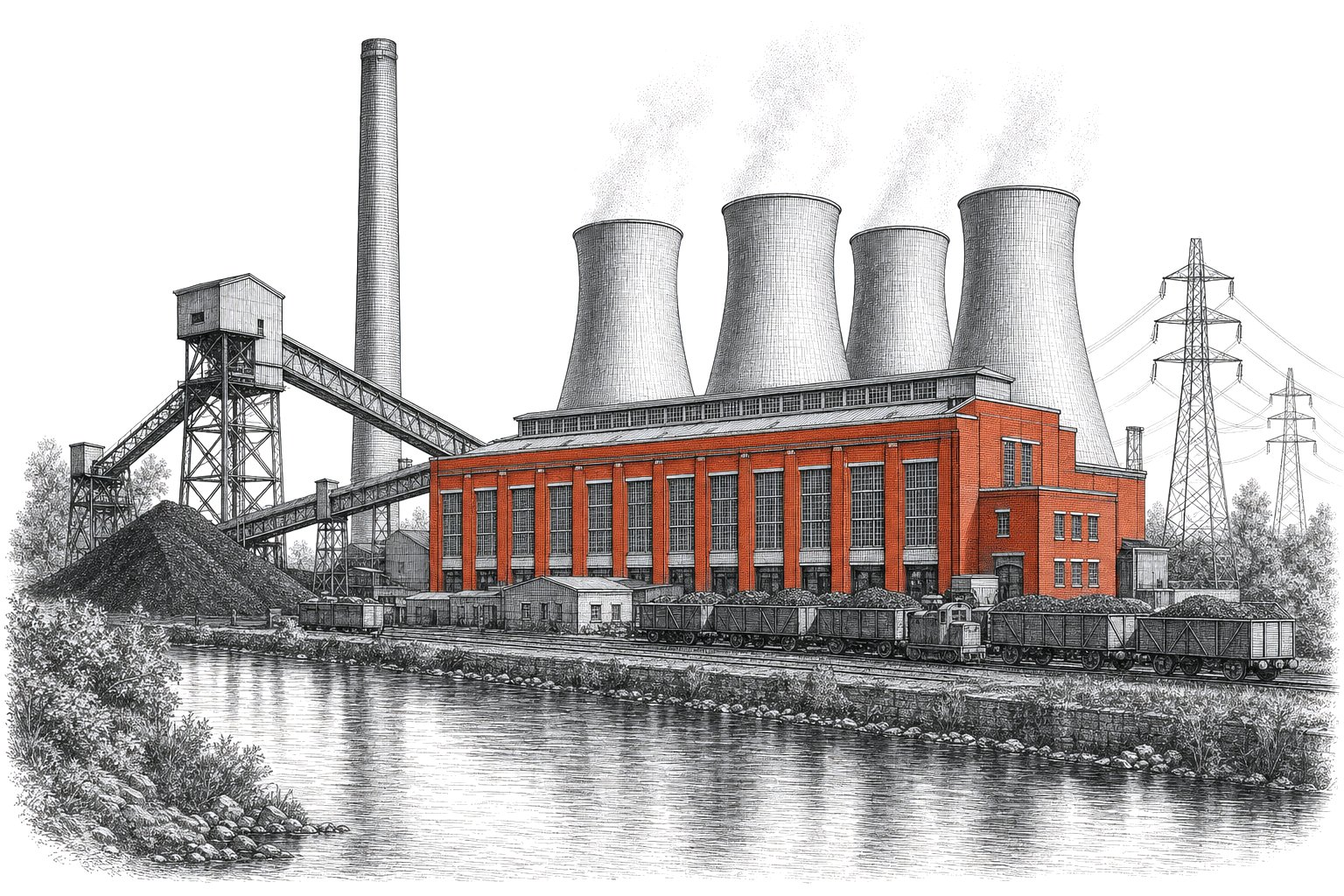
Public electricity in Manchester began on Dickinson Street at the end of July 1893, in a station designed by Dr John Hopkinson to supply direct current to about half a square mile around the town centre. Demand outran it almost at once. The Corporation built Bloom Street next door in 1901, largely to feed the electric trams, then the far bigger Stuart Street station at Bradford, in the same district as the colliery, in 1900-1902. Barton followed in Trafford Park in 1923, burning coal brought along the canal by barge.
After nationalisation in 1948 the big plants moved out to the edges of the conurbation: Carrington on the Ship Canal, Chadderton B, and the rebuilt Agecroft, fed by conveyor straight from the colliery over the road. The table, dates and what stands on each site now are collected on the power stations in Greater Manchester page.
Joule's measurement
One more thread runs through Manchester energy history, and it is a scientific one. James Prescott Joule, son of a Salford brewer and a pupil of John Dalton, spent the 1840s showing that work and heat are the same quantity measured in different units. His falling weights and paddle wheel put a number on the exchange rate, around 772 foot-pounds of work for each British thermal unit of heat. Every engine in the sections above was, in effect, converting one into the other at that rate, and every engineer who later sized a boiler or a turbine used his figure. The page on James Joule explains the experiment and lets you run the arithmetic yourself.
A detail worth knowing before you go looking: the Stuart Street site is now the Manchester Velodrome, and the Bradford Colliery ground next to it lies partly under the City of Manchester Stadium. The east Manchester sports campus stands on what was, for most of the twentieth century, the city's coal and electricity yard.
Questions readers ask.
Notes / 04Q01When did Manchester get electricity?
Manchester Corporation opened its first public power station on Dickinson Street at the end of July 1893. It was designed by Dr John Hopkinson and supplied a district of roughly half a square mile around the town centre with direct current. A larger neighbour on Bloom Street followed in 1901, mainly to feed the new electric trams.
Q02What was the Manchester Hydraulic Power Company?
It was a public network, commissioned in 1894, that pumped water at 1,120 psi through cast iron mains under the city centre. Customers used it to work cranes, lifts and above all cotton baling presses. At its height in the 1930s it had about 35 miles of pipe and roughly 2,400 machines connected. It closed in 1972.
Q03Did Manchester have its own coal mines?
Yes. Bradford Colliery, in the east of the city near the present stadium, worked seams more than 900 yards down and only closed in 1968. Pendleton, Agecroft and Clifton Hall lay just across the Irwell in Salford, and dozens more pits worked the wider Manchester Coalfield.
Q04Who ran Manchester's gas supply?
Gas was first made on a small scale by the Manchester Police Commissioners from 1807, and their Water Street works of 1817 supplied street lamps and police offices. The whole undertaking passed to Manchester Corporation in 1843 (some sources say 1844), one of the earliest examples of a council owning its gas supply outright.