Industrial Manchester: How Canals, Railways and Mills Shaped the City
Canal basins, a railway terminus, mill districts and the world's first planned industrial estate: the layout of Manchester still follows the routes that coal, cotton and goods once took through it.
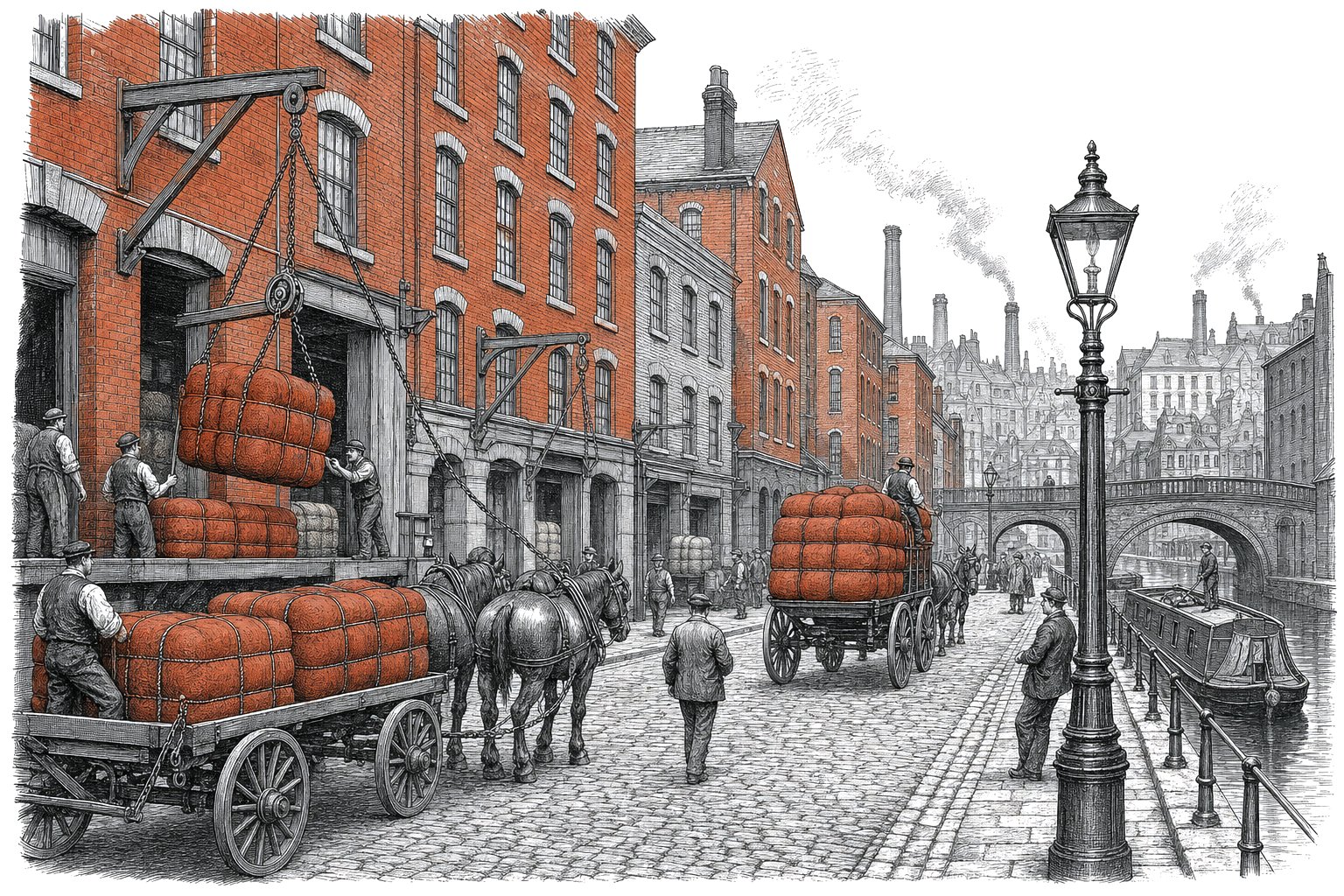
Sheets in this section.
06 entries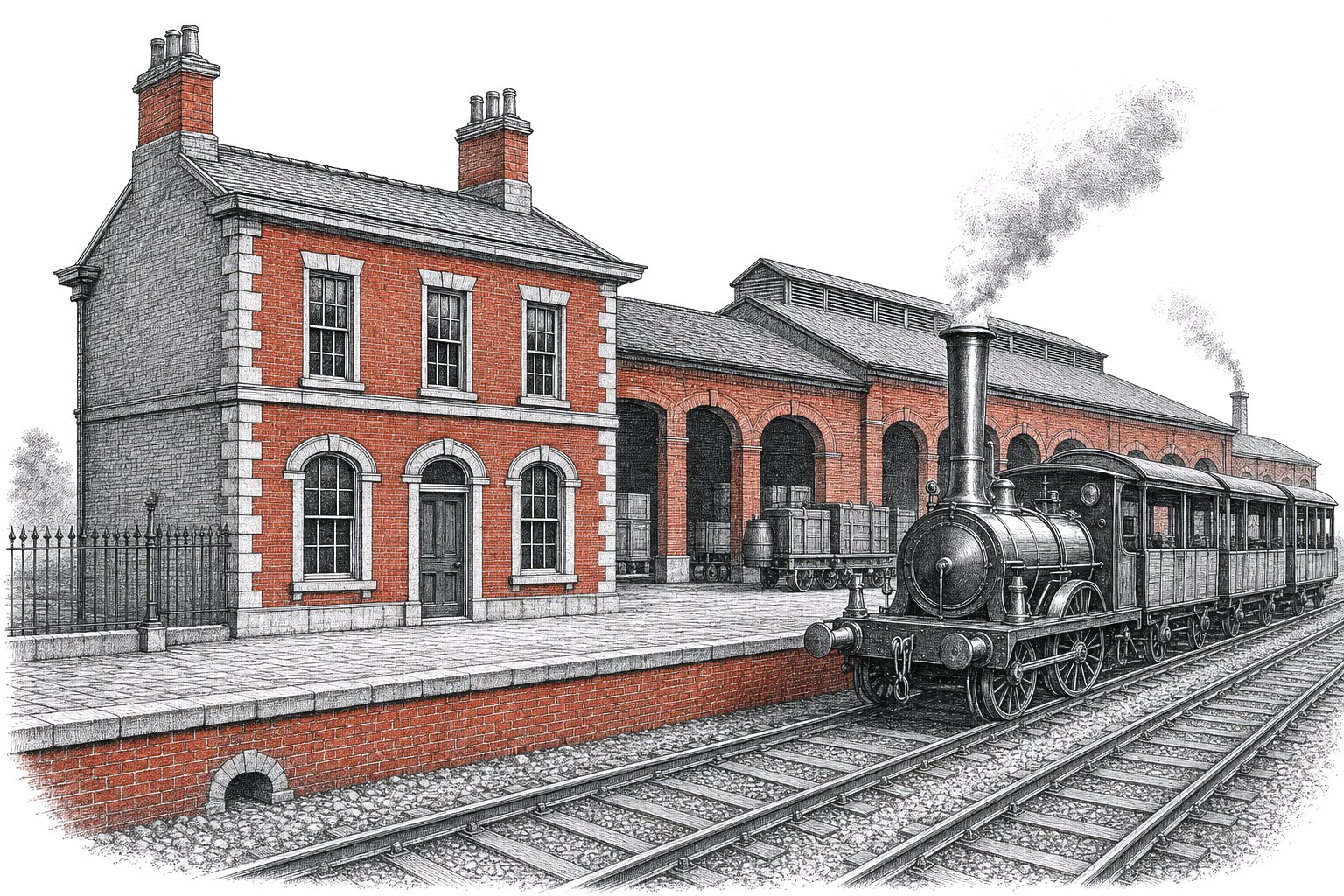
Liverpool Road Station
The Manchester end of the Liverpool and Manchester Railway is the oldest surviving terminal railway station in the world: a stuccoed brick front on Liverpool Road, a viaduct behind it and a warehouse opposite.
John Dee Manchester
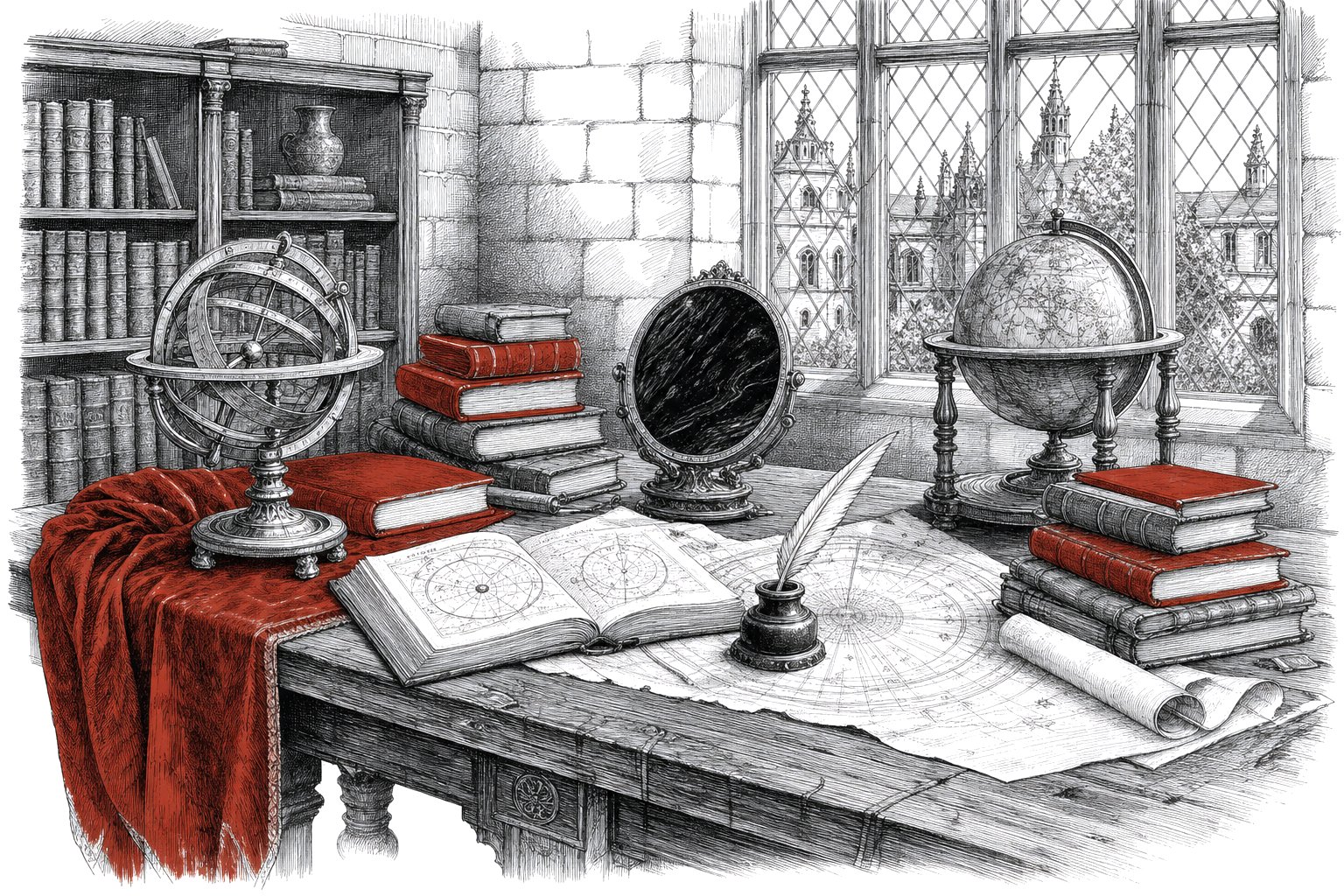
Elizabeth I's mathematician and astrologer spent his last working decade as head of Manchester's collegiate church, short of money, at odds with his fellows and followed by rumours of conjuring.
Alcock and Brown
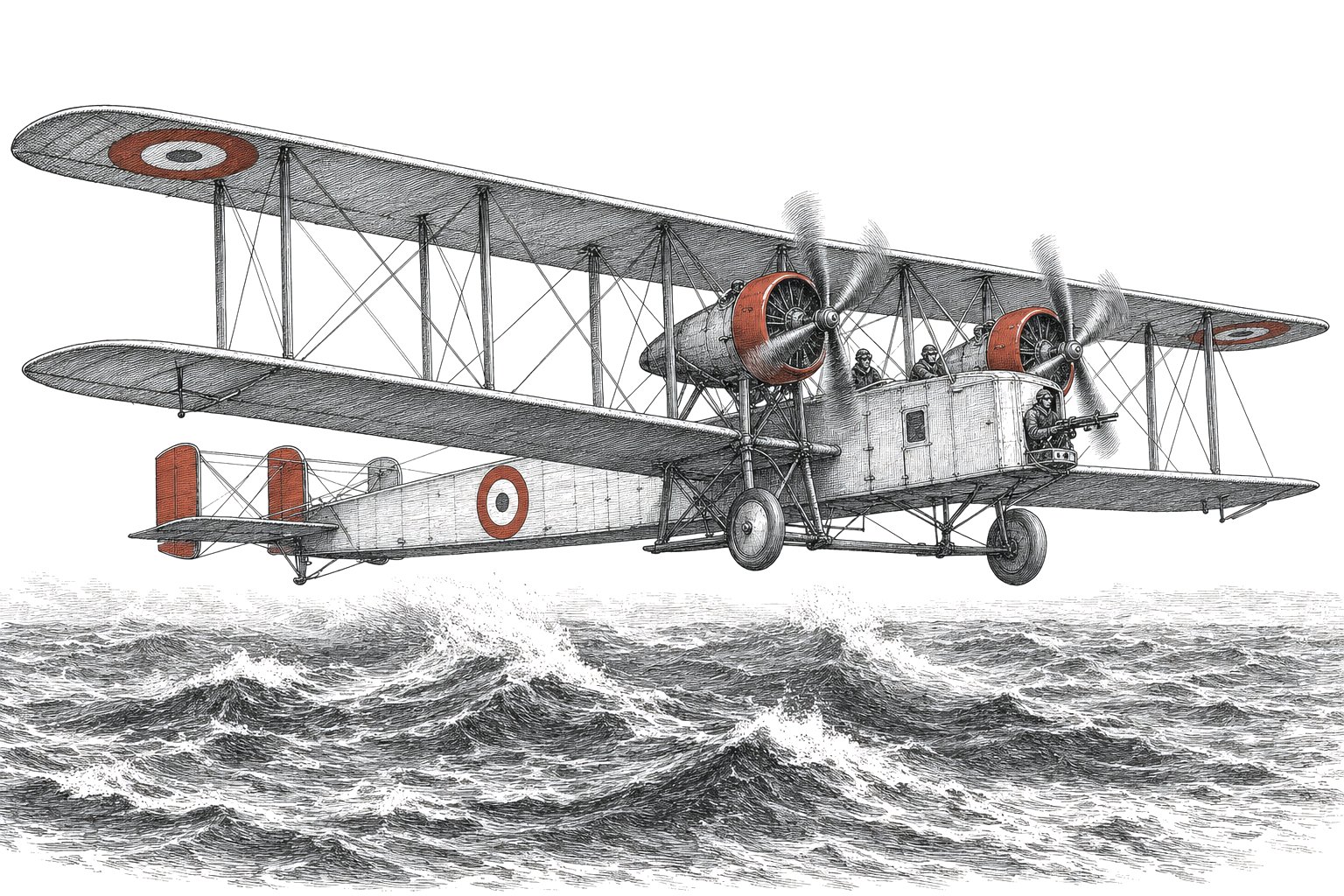
A pilot from Firswood and a navigator raised in Trafford Park flew a converted bomber 1,890 miles from Newfoundland to an Irish bog in under sixteen hours, six months before one of them was dead.
Bridgewater Canal
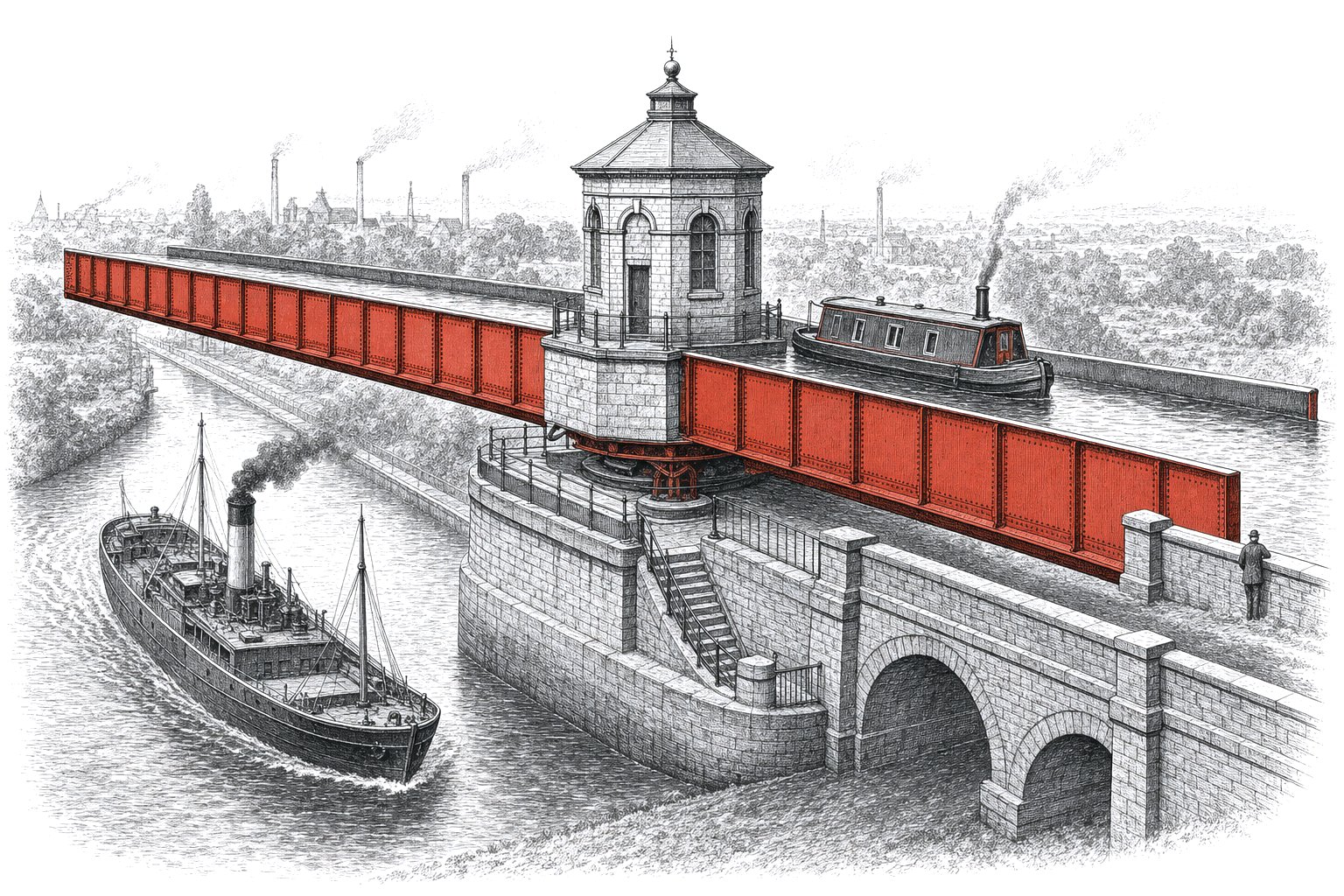
A duke with coal mines at Worsley, his engineer James Brindley and his estate manager John Gilbert built a canal that crossed a river on a bridge and roughly halved the price of coal in Manchester.
Manchester Underground Tunnels
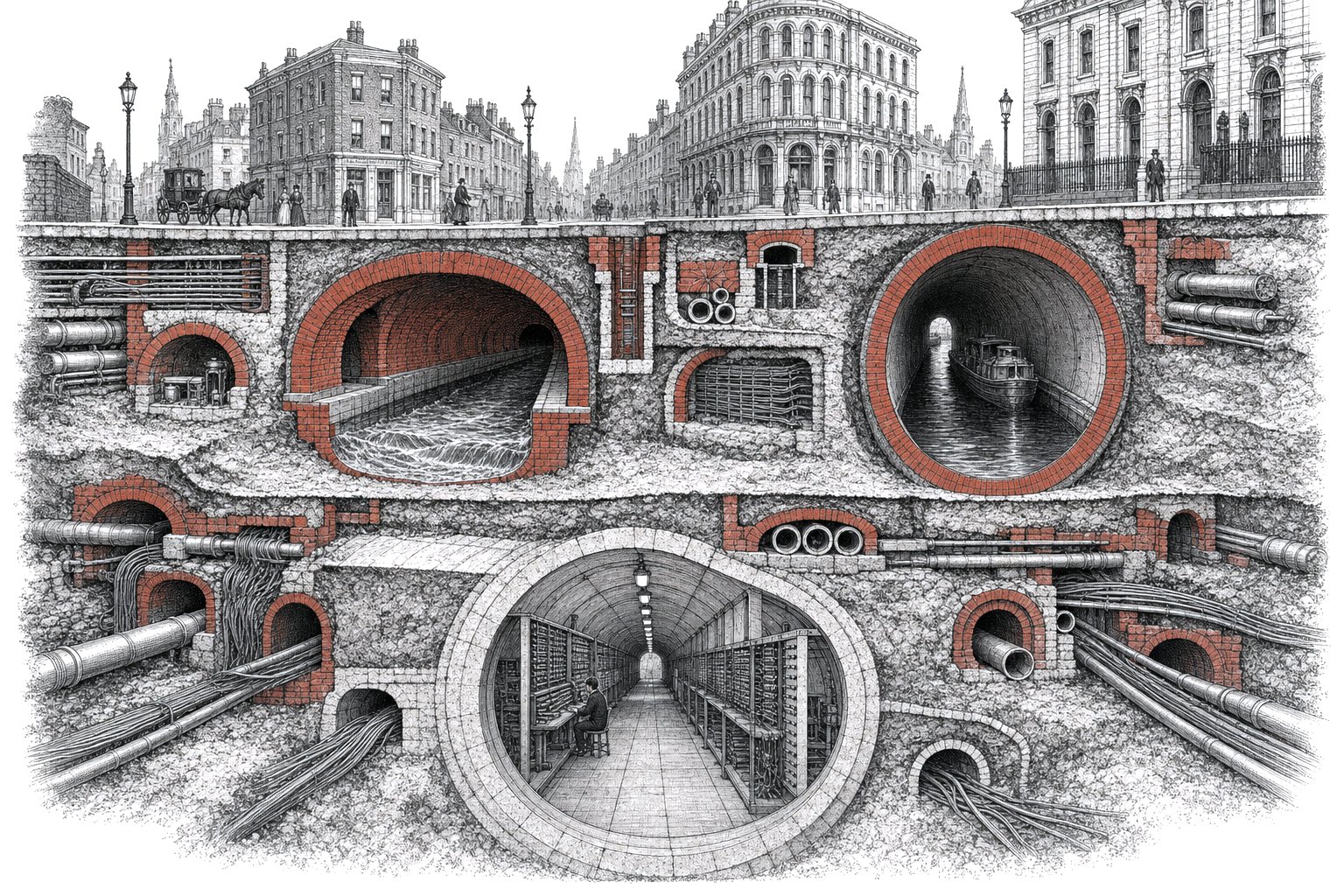
Bricked-up river arches, a Cold War telephone exchange 35 metres down, a canal tunnel under a television studio and a railway that was never dug: what lies under Manchester, and what you can actually see.
Manchester Industrial Heritage Sites
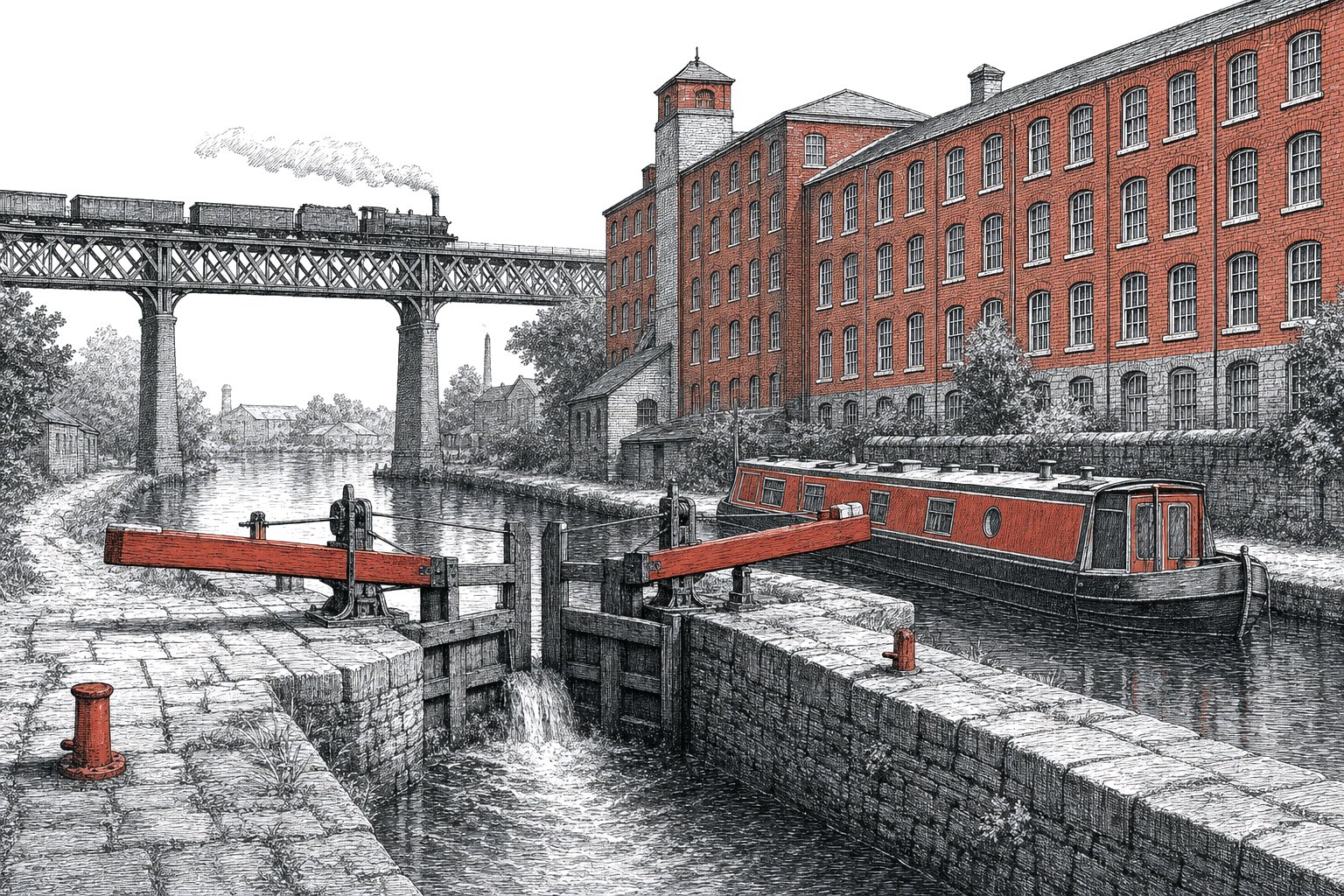
The cotton city did not vanish when the chimneys went cold. Its mills, canal locks, railway terminus and libraries still stand, most of them within a long walk of each other.
Stand on the towpath at Castlefield Basin and four railway viaducts cross the sky above a canal that opened in 1761. That single view explains most of industrial Manchester better than any map: each new way of moving goods arrived on top of the last one, and the city was built in the gaps between them. The pages in this section follow those layers, from coal boats to tunnels nobody was meant to see.
Coal by water, 1761
The story starts with a fuel bill. Francis Egerton, the 3rd Duke of Bridgewater, owned coal mines at Worsley and wanted a cheaper way to get the coal into Manchester than packhorse and cart. His engineer James Brindley and his estate manager John Gilbert planned a canal that crossed the River Irwell on a stone aqueduct at Barton, and the first boat went over it on 17 July 1761. Within a year the price of coal in Manchester had roughly halved.
That figure matters more than the engineering. Cheap coal meant cheap steam, and cheap steam meant mills could be built in the town instead of beside fast rivers in the Pennine valleys. The full story of the duke, the underground canals at Worsley and the later swing aqueduct is on the page about the Bridgewater Canal.
The canal ended at Castlefield, beside the River Medlock. Warehouses grew around its basins, and the Rochdale Canal joined it there in 1804, opening a route over the Pennines. Castlefield was a freight yard long before it became a place for a Sunday walk.
The railway arrives at Liverpool Road
On 15 September 1830 the Liverpool and Manchester Railway opened, the first inter-city line worked by timetabled steam locomotives. Its Manchester end was a modest brick building on Liverpool Road with a warehouse opposite, a few hundred metres from the canal basin. The site survives and is Grade I listed. The page on Liverpool Road station covers the opening day, the death of William Huskisson and why passengers left the station after only fourteen years.
Railways did not replace the canals overnight. For decades the two ran side by side, and Castlefield became a knot of both. The Manchester and Salford Junction Canal of 1839 even went underground to link the Irwell with the Rochdale Canal, and parts of it still lie beneath later buildings.
Ancoats, the mill suburb
North-east of the centre, the Rochdale Canal made Ancoats. Adam and George Murray started their mills beside it in 1798, and the Old Mill, Decker Mill and New Mill followed between 1798 and 1804. Mill building grew much larger once the canal opened in 1804, and by 1815 Ancoats was the most populous district in Manchester. In 1851 it held 53,737 people.
Ancoats is often called the world's first industrial suburb. The label is fair if you mean a district laid out for steam-powered factories and the people who worked in them, rather than a village that grew around one mill. Walk down Redhill Street today and the scale is still obvious: mill walls run for whole blocks beside the canal. How these buildings worked inside is covered on the page about Manchester's cotton mills.
Engels and the hidden city
Friedrich Engels came to Manchester in 1842 to work as a clerk at Ermen & Engels's Victoria Mill in Weaste, Salford. He spent the next two years walking the working districts, and the result, The Condition of the Working Class in England, was published in German in Leipzig in 1845. An English translation did not appear until 1887.
Engels returned in November 1850 and stayed with the family firm until he retired on 30 June 1869. He is a reminder that industrial Manchester was a social experiment as much as an engineering one, and that the same canals and railways that made fortunes also packed thousands of families into cellars and courts. In summer 1845 he and Karl Marx read together in a window alcove at Chetham's Library, the same building where the Elizabethan scholar John Dee had lived as Warden two and a half centuries earlier.
Trafford Park and the ship canal
The last big layer came in the 1890s. The Manchester Ship Canal turned an inland town into a port, and on 23 June 1896 Ernest Terah Hooley bought the Trafford estate beside it for £360,000. Trafford Park became what is usually described as the first planned industrial estate in the world, covering about 4.7 square miles.
British Westinghouse was the first major firm to arrive, producing turbines and generators from 1902; by 1903 about half the park's 12,000 workers were on its payroll. Ford came in 1911 to assemble the Model T. During the Second World War Ford built Rolls-Royce Merlin engines there under licence, and at its peak in 1945 the park employed 75,000 people. The Westinghouse works later became Metropolitan-Vickers, and one of its young engineers, Arthur Whitten Brown, navigated the first non-stop transatlantic flight with Jack Alcock, as told on the page about Alcock and Brown.
The city below the streets
Industry also left a second Manchester underground. Rivers were roofed over to make room for stations: the River Irk runs in a culvert beneath Victoria station before reaching the Irwell. Brick arches built into the Irwell embankment in the 1830s became landing stages and then wartime shelters. In the 1950s a Cold War telephone exchange was dug more than 35 metres below the city centre, and in the 1970s a rail tunnel between Piccadilly and Victoria got as far as detailed plans before the government refused the money.
Most of this is closed to the public, which is exactly why it attracts so many myths. The page on Manchester's underground tunnels separates what is documented from what is pub talk.
Reading the streets today
A practical way to see industrial Manchester in an afternoon is to walk it in order of age. Start at Castlefield Basin for the 1761 canal and the Merchants' Warehouse of around 1827, cross to Liverpool Road for the 1830 railway buildings, then follow the Rochdale Canal towpath east. Between Dale Street and Minshull Street the towpath drops under Piccadilly in a gloomy stretch known as the Undercroft. Keep going and the canal brings you out among the Ancoats mills.
Look up at bridges as well as buildings. Cast-iron beams, worn stone steps for horses and blocked-up loading doors three storeys high tell you what a building handled. For the drawings that engineers made of such structures, the general arrangement drawings page explains how to read them, and the workshop glossary covers the vocabulary.
One small oddity to finish the walk: the viaducts over Castlefield are usually dated 1848, 1877 and 1898, yet the Great Northern viaduct is also given as 1894. Nobody has made a plaque that settles it.
Questions readers ask.
Notes / 05Q01Why is Manchester called the first industrial city?
Manchester grew faster and earlier than any comparable town around the cotton trade. It had the first industrial canal to reach a city, the first inter-city passenger railway terminus at Liverpool Road in 1830, the steam-powered mill district of Ancoats and later Trafford Park, described as the first planned industrial estate in the world. The term describes that combination rather than a single invention.
Q02What is Ancoats known for?
Ancoats, just north-east of the city centre, is often called the world's first industrial suburb. Mills such as Adam and George Murray's, begun beside the Rochdale Canal in 1798, drew thousands of workers into dense terraces. By 1815 it was Manchester's most populous district, and in 1851 it held 53,737 people. Many mill buildings survive as flats and offices.
Q03When did Trafford Park open as an industrial estate?
Ernest Terah Hooley bought the Trafford estate on 23 June 1896 for £360,000, next to the newly opened Manchester Ship Canal. British Westinghouse began producing turbines and generators there in 1902 and Ford assembled the Model T from 1911. At its peak in 1945 the park employed about 75,000 people.
Q04Where did Friedrich Engels work in Manchester?
Engels arrived in 1842 to work as a clerk at Ermen & Engels's Victoria Mill in Weaste, Salford, a firm part-owned by his family. His observations of the city's working districts became The Condition of the Working Class in England, published in German in Leipzig in 1845. He returned in November 1850 and stayed with the firm until 30 June 1869.
Q05Can you still see industrial Manchester today?
Yes, much of it is walkable. Castlefield keeps the Bridgewater Canal basin, the Merchants' Warehouse of around 1827 and the Victorian railway viaducts. Ancoats keeps its mills along the Rochdale Canal. The 1830 buildings of Liverpool Road station stand on Liverpool Road, and the Rochdale Canal towpath runs underground below Piccadilly.